
Primary Distribution Switchgear: The Foundation of Reliable Medium-Voltage Power Systems
The following is the table of contents for this article.
Thanks for sharing the article.
The Critical Role of Primary Distribution Switchgear
Reliable electricity supply begins with a strong and stable power distribution foundation. Before electricity reaches commercial buildings, industrial facilities, renewable energy projects, and public infrastructure, it must pass through carefully designed medium-voltage distribution systems.
At the beginning of this process, primary distribution switchgear plays a vital role.
Primary distribution switchgear is responsible for receiving electrical power from utility substations or generation sources and distributing it safely to downstream distribution networks. It provides essential switching, protection, and control functions that help maintain grid stability and protect valuable electrical equipment.
As power demand continues to increase due to industrial expansion, data centers, renewable energy integration, and electrification trends, reliable primary distribution equipment has become more important than ever.
What Is Primary Distribution Switchgear?
Primary distribution switchgear is medium-voltage electrical equipment installed at the first stage of a distribution network after power generation or transmission substations.
It is mainly used to:
- Receive incoming medium-voltage power
- Control electrical circuits
- Protect transformers and feeders
- Isolate faults
- Distribute electricity to secondary networks
Typical voltage levels include:
- 6 kV
- 10 kV
- 11 kV
- 12 kV
- 24 kV
- 36 kV
A primary distribution switchgear system usually contains:
- Vacuum circuit breakers (VCBs)
- Incoming feeder panels
- Outgoing feeder panels
- Busbar systems
- Protection relays
- Current transformers (CTs)
- Voltage transformers (VTs)
- Earthing switches
- Metering equipment
- Communication modules
How Primary Distribution Switchgear Works
Primary distribution switchgear manages the first stage of medium-voltage power distribution.
Receiving Utility Power
Electricity enters the facility or substation through incoming feeders connected to the utility network.
The incoming switchgear section controls and protects this power supply.
Power Switching and Control
Circuit breakers allow operators to connect or disconnect electrical circuits safely during normal operation or maintenance.
Fault Protection
When abnormal conditions occur, protection relays detect problems such as:
- Short circuits
- Ground faults
- Overcurrent conditions
- Equipment failures
The vacuum circuit breaker then interrupts the fault current to protect the electrical system.
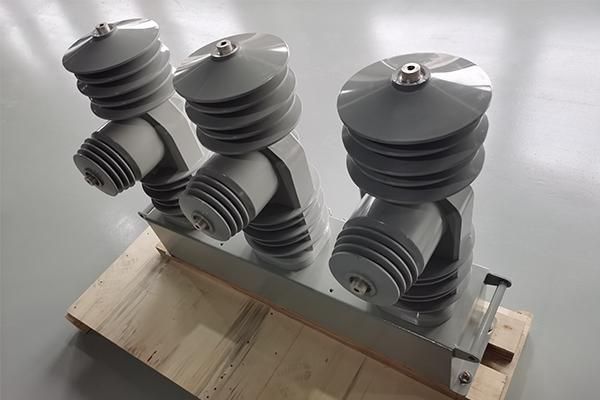
Primary distribution switchgear installed in a medium-voltage substation
Power Distribution to Downstream Networks
After protection and control, power is distributed through outgoing feeders to transformers, secondary substations, or industrial loads.
Main Components of Primary Distribution Switchgear
The reliability of a primary distribution system depends on several key components.
Vacuum Circuit Breakers
Vacuum circuit breakers are commonly used in primary distribution switchgear because of their:
- High interruption capability
- Long mechanical lifespan
- Low maintenance requirements
- Reliable switching performance
They provide fast protection during electrical faults.
Protection Relays
Modern digital protection relays continuously monitor electrical conditions and provide accurate fault detection.
They support:
- Overcurrent protection
- Ground fault protection
- Distance protection
- Communication with control systems
Busbar Systems
Busbars distribute electrical power between incoming and outgoing circuits while maintaining safe current flow.
Instrument Transformers
Current transformers and voltage transformers provide measurement signals for protection, monitoring, and control systems.
Primary Distribution Switchgear vs Secondary Distribution Switchgear
Although both systems operate in medium-voltage networks, their positions and functions are different.
| Feature | Primary Distribution Switchgear | Secondary Distribution Switchgear |
|---|---|---|
| Network Position | Upstream distribution level | Downstream distribution level |
| Main Function | Receive and distribute medium voltage power | Deliver power closer to end users |
| Typical Location | Main substations and industrial substations | Secondary substations and customer facilities |
| Power Level | Higher capacity | Lower distribution capacity |
| Main Focus | Grid protection and power control | Local feeder management |
Primary distribution switchgear forms the first protection layer, while secondary distribution switchgear manages power closer to consumption points.
Applications of Primary Distribution Switchgear
Primary distribution switchgear is widely used in high-demand electrical systems.
Utility Substations
Utilities rely on primary switchgear to control medium-voltage distribution networks and maintain grid reliability.
Industrial Plants
Large manufacturing facilities use primary distribution equipment to receive utility power and supply production systems.
Renewable Energy Projects
Solar farms, wind farms, and energy storage facilities require primary switchgear for grid connection and power collection.
Data Centers
Large data centers use primary distribution systems to manage high-capacity electrical loads.
Transportation Infrastructure
Railways, airports, and metro systems depend on reliable primary electrical distribution.
Advantages of Modern Primary Distribution Switchgear
Advanced primary distribution solutions provide significant benefits.
Reliable Power Protection
Fast fault interruption helps prevent damage to transformers, cables, and other electrical assets.
Improved System Safety
Metal-enclosed designs and advanced protection systems reduce risks during operation and maintenance.
Higher Network Availability
Reliable switching equipment helps minimize downtime and improve electrical system continuity.
Flexible Expansion
Modular configurations allow future network upgrades and additional feeder connections.
Digital Integration
Modern systems can integrate monitoring, automation, and communication technologies.
Primary Distribution Switchgear and Smart Grid Development
The development of smart grids is changing the requirements for primary distribution equipment.
Modern primary switchgear increasingly supports:
- Digital protection relays
- Remote monitoring
- SCADA integration
- IEC 61850 communication
- Condition monitoring
- Automated fault management
These technologies allow utilities and industrial operators to improve network visibility and operational efficiency.
How to Select Primary Distribution Switchgear
Selecting the correct equipment requires careful analysis of electrical and operational requirements.
Important considerations include:
Voltage Rating
The switchgear must match the network voltage level and insulation requirements.
Current Capacity
The rated current should support expected power demand and future expansion.
Short-Circuit Capability
Equipment must safely withstand and interrupt potential fault currents.

Primary distribution switchgear installed in a medium-voltage substation
Protection Requirements
Protection functions should match system design and coordination requirements.
Environmental Conditions
Consider:
- Indoor or outdoor installation
- Temperature
- Humidity
- Pollution level
- Altitude
Communication Functions
Modern projects may require integration with:
- SCADA
- Smart grid platforms
- Energy management systems
Future Trends in Primary Distribution Switchgear
Primary distribution technology continues to evolve with changing energy demands.
Future trends include:
- SF₆-free switchgear technology
- Digital substations
- Intelligent monitoring
- AI-based fault prediction
- Renewable energy integration
- Battery storage connection
- Automated distribution networks
- Remote operation systems
These developments are helping create more flexible and sustainable power networks.
Frequently Asked Questions
What is primary distribution switchgear?
Primary distribution switchgear is medium-voltage electrical equipment used at the beginning of distribution networks to receive, control, protect, and distribute electrical power.
Where is primary distribution switchgear installed?
It is commonly installed in utility substations, industrial substations, renewable energy plants, data centers, and large commercial facilities.
What is the difference between primary and secondary distribution switchgear?
Primary switchgear manages incoming medium-voltage power at the upstream distribution level, while secondary switchgear distributes electricity closer to end users.
Why are vacuum circuit breakers used in primary distribution switchgear?
Vacuum circuit breakers provide reliable fault interruption, long service life, and low maintenance for medium-voltage protection applications.
Can primary distribution switchgear support renewable energy projects?
Yes. It is widely used for grid connection, power collection, and protection in solar, wind, and battery energy storage systems.
Building Strong Foundations for Modern Power Networks
Primary distribution switchgear is the first major protection and control point in medium-voltage electrical systems. By providing reliable switching, fault protection, and power management, it supports the safe operation of utilities, industries, renewable energy projects, and critical infrastructure.
As electrical networks become more complex and decentralized, advanced primary distribution solutions will continue to play a key role in creating reliable, intelligent, and sustainable power systems.
For utilities, EPC contractors, electrical consultants, and equipment distributors, selecting high-quality primary distribution switchgear is essential for building resilient electrical infrastructure.

Wind Substation Equipment: Types, Functions, and Selection Guide
Wind substation equipment plays a critical role in collecting, transforming, protecting, and transmitting electricity generated by wind turbines. From medium-voltage (MV) switchgear and power transformers to high-voltage (HV) equipment, protection [...]

Solar Farm Switchgear: Selection, Design, and Application Guide
Solar farm switchgear is an essential part of the electrical infrastructure used to collect, control, protect, and distribute power generated by photovoltaic (PV) systems. From inverter output circuits and transformer [...]

Future-Proof Switchgear: Design, Selection, and Long-Term Reliability
Future-proof switchgear is designed and selected to accommodate changing electrical loads, evolving technologies, operational requirements, and future expansion with minimal disruption. For industrial facilities, commercial buildings, utilities, renewable energy projects, [...]