
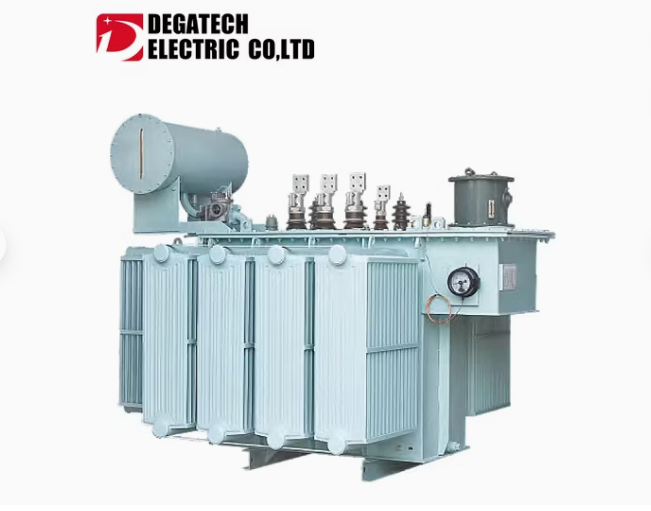
Oil Immersed Distribution Transformer: Understanding Letter Designations
The following is the table of contents for this article.
Thanks for sharing the article.
What Do the Letter Designations on Oil Immersed Distribution Transformers Mean?
Table of Contents
Introduction: Importance of Oil Immersed Distribution Transformers
Why Letter Designations Matter
Understanding the Common Letter Codes
3.1 S‑Series: Efficiency Grades
3.2 M / F / K: Tank and Insulation Types
3.3 Cooling Classes: ONAN, ONAF, KNAN
3.4 Vector Group Designations: DY, Yd, etc.
3.5 Rated Voltage and CapacityEngineering Implications of Each Designation
How to Interpret Designations for Selection and Safety
Installation and Maintenance Considerations
Degatech Electric Co. Ltd.: Quality and Reliability
Application Scenarios Across Industries
Tips for Procurement and Specification
Conclusion: Maximizing Efficiency and Safety
Frequently Asked Questions (FAQ)
1. Introduction: Importance of Oil Immersed Distribution Transformers
Oil immersed distribution transformers are critical components of medium-voltage (MV) power systems. They step down high voltage to usable levels for commercial, industrial, and residential applications. Unlike dry-type transformers, oil immersed units provide:
Enhanced cooling and heat dissipation
Improved short-circuit withstand capability
Long-term reliability in varying environmental conditions
For engineers, understanding the letter designations in transformer model numbers is essential. These letters and numbers communicate efficiency, insulation type, cooling method, tank configuration, and application class. Misinterpretation can lead to:
Overloading
Inefficient energy usage
Increased maintenance
Safety hazards
Degatech Electric Co. Ltd. manufactures transformers designed for durable operation, compliance with international standards, and seamless integration with medium-voltage distribution systems.
2. Why Letter Designations Matter
Letter designations act as compact engineering shorthand, indicating critical technical parameters:
Transformer series (efficiency and performance level)
Tank design (sealed, conservator, fire-resistant)
Cooling system type (natural vs. forced, air/oil)
Connection configuration (vector group)
Primary and secondary voltage ratings
Correct interpretation ensures that:
System integration is smooth
Load capacity is respected
Maintenance requirements are minimized
Operational safety is guaranteed
3. Understanding the Common Letter Codes
Oil immersed distribution transformers commonly include letters such as S, M, F, K, DY, Yd, and cooling class codes ONAN, ONAF, KNAN. Let’s break these down.
3.1 S‑Series: Efficiency Grades
S9, S11, S13, S15 indicate transformer efficiency
Higher numbers mean lower no-load losses, reducing energy consumption
Selecting higher efficiency grades improves lifecycle cost and meets sustainability goals
Example: An S11 transformer is more efficient than S9, reducing operational losses by 10–15%.
3.2 M / F / K: Tank and Insulation Types
| Letter | Meaning | Key Benefit |
|---|---|---|
| M | Full Sealed Tank | Minimal maintenance, no conservator, suitable for indoor use |
| F | Conservator Tank | Provides oil expansion, often used outdoors, facilitates monitoring oil level |
| K | Less Flammable Oil | Fire-safe, suitable for indoor environments or sensitive installations |
M-Series Sealed Transformers: Low maintenance, no oil topping needed, ideal for urban environments
F-Series with Conservator: Provides visible oil level and allows thermal expansion, often outdoor installations
K-Series: Uses fire-resistant insulating fluids, improving safety compliance
3.3 Cooling Classes: ONAN, ONAF, KNAN
Cooling letters indicate the method of heat dissipation:
O = Mineral oil
K = Less flammable oil
N = Natural circulation
F = Forced circulation
Examples:
ONAN: Oil Natural Air Natural – standard self-cooled transformer
ONAF: Oil Natural Air Forced – oil self-cooled, air forced with fans
KNAN: Less flammable oil, self-cooled
Understanding cooling class ensures the transformer operates reliably under ambient temperature and load conditions.
3.4 Vector Group Designations: DY, Yd, etc.
Vector group letters indicate winding configuration and phase shift:
Y / Dy / Yd: Star or delta primary/secondary
Number indicates phase displacement in multiples of 30°
Impacts parallel operation, short-circuit currents, and neutral earthing
Correct vector group selection is essential for:
Grid compatibility
Parallel operation of multiple transformers
Minimizing circulating currents
3.5 Rated Voltage and Capacity
Voltage: typically expressed as 10kV, 20kV, 35kV, etc.
Capacity: expressed in kVA or MVA
These numbers indicate nominal voltage and load capability
Correct sizing prevents overloading, overheating, and premature failure
4. Engineering Implications of Each Designation
Correctly interpreting letter designations provides:
Accurate thermal and load planning
Reduced downtime due to maintenance issues
Compliance with international standards (IEC 60076, EN 50541, IEEE C57)
Compatibility with switchgear and distribution networks
5. How to Interpret Designations for Selection and Safety
Step-by-step guide:
Check series grade (S9, S11, etc.) for efficiency requirement
Verify tank type (M, F, K) for environmental and maintenance considerations
Confirm cooling class (ONAN, ONAF) for load and temperature conditions
Cross-reference vector group for grid connection
Match voltage and kVA rating with system design
Ensure material and fire safety compliance
Degatech transformers are designed with clear labeling and documentation to assist engineers in this process.
6. Installation and Maintenance Considerations
Inspect tank, bushings, and oil level before energizing
Ensure grounding and bonding according to standard
Confirm transformer is correctly rated for site temperature and humidity
Routine maintenance: visual inspection, oil testing, bushing checks, tap changer verification
Keep maintenance logs for long-term reliability
7. Degatech Electric Co. Ltd.: Quality and Reliability
Degatech offers transformers with:
High-quality core steel and copper windings
Durable oil-filled tanks for long service life
Precise tap changers for voltage regulation
Sealed or conservator options for various applications
Compliance with IEC, EN, and IEEE standards
Our transformers are ideal for industrial plants, utilities, commercial buildings, and renewable energy projects.
8. Application Scenarios Across Industries
| Industry | Application Example |
|---|---|
| Utilities | Distribution network step-down |
| Manufacturing | Power supply for production equipment |
| Renewable Energy | Wind/PV substations |
| Commercial | Office building or data center MV distribution |
| Rail/Transport | Traction substations |
9. Tips for Procurement and Specification
Always request the full designation code from the manufacturer
Ensure the series, tank type, and cooling class match site requirements
Verify vector group for grid or parallel operation
Request test certificates and standard compliance reports
Consider Degatech’s customization options for unique layouts
10. Conclusion: Maximizing Efficiency and Safety
Letter designations on Oil Immersed Distribution Transformers are not just labels; they are a roadmap to transformer performance, efficiency, and safety. Engineers and procurement teams must interpret them carefully to ensure:
Correct integration into MV networks
Compliance with safety and environmental standards
Long-term reliable operation
Degatech Electric Co. Ltd. provides a full range of high-quality oil immersed transformers with clear designation codes, helping you achieve efficient, safe, and reliable distribution.
11. Frequently Asked Questions (FAQ)
Q1: What does “S11” or “S13” indicate?
Efficiency grade of the transformer. Higher numbers mean lower no-load losses.
Q2: What is the difference between M and F tank types?
M = sealed transformer (low maintenance), F = conservator type (with oil expansion tank, suitable for outdoor use).
Q3: What do the letters in cooling class mean?
First letter = oil type (O = mineral oil, K = less flammable), subsequent letters = circulation method (N = natural, F = forced).
Q4: Why is the vector group important?
Determines winding configuration, phase shift, and parallel operation compatibility.
Q5: Can I use a transformer with higher kVA than my load?
Yes, oversizing is allowed and may improve lifespan, but unnecessary oversizing increases cost.
Q6: Are Degatech Oil Immersed Transformers suitable for indoor use?
Yes, M-series sealed transformers with TPE bushings are ideal for indoor installations.
Q7: How often should maintenance be performed?
Visual inspection: quarterly
Oil testing: annually
Tap changer check: per manufacturer recommendation

Wind Substation Equipment: Types, Functions, and Selection Guide
Wind substation equipment plays a critical role in collecting, transforming, protecting, and transmitting electricity generated by wind turbines. From medium-voltage (MV) switchgear and power transformers to high-voltage (HV) equipment, protection [...]

Solar Farm Switchgear: Selection, Design, and Application Guide
Solar farm switchgear is an essential part of the electrical infrastructure used to collect, control, protect, and distribute power generated by photovoltaic (PV) systems. From inverter output circuits and transformer [...]

Future-Proof Switchgear: Design, Selection, and Long-Term Reliability
Future-proof switchgear is designed and selected to accommodate changing electrical loads, evolving technologies, operational requirements, and future expansion with minimal disruption. For industrial facilities, commercial buildings, utilities, renewable energy projects, [...]