

Epoxy Resin Wall Bushing for Indoor 24 kV SF₆ Gas Insulated Switchgear
The following is the table of contents for this article.
Thanks for sharing the article.
Introduction
In indoor medium-voltage SF₆ gas-insulated switchgear, the wall bushing plays a critical role as the interface between the sealed gas compartment and external electrical connections. For 24 kV GIS systems, epoxy resin wall bushings have become the preferred solution due to their compact design, high dielectric strength, and excellent compatibility with SF₆ insulation systems.
Unlike air-insulated bushings, epoxy resin wall bushings are designed to operate partly inside an SF₆ environment and partly in air, while maintaining strict insulation coordination, gas tightness, and mechanical stability. Their design directly affects dielectric reliability, gas containment, and long-term service life of the GIS.
Function of a Wall Bushing in SF₆ GIS
A wall bushing in SF₆ GIS performs several essential functions simultaneously:
Transfers electrical current through the grounded enclosure wall
Maintains insulation between live conductor and grounded tank
Separates SF₆ gas environment from external air
Preserves gas pressure and leak tightness
Withstands mechanical stress from conductor connection
Failure of a wall bushing can lead to gas leakage, partial discharge, or flashover, making its design and quality critical.
Why Epoxy Resin Is Used for GIS Wall Bushings
Epoxy resin is widely adopted for GIS wall bushings because of its electrical, mechanical, and manufacturing advantages.
Key benefits include:
High dielectric strength
Uniform insulation without internal voids
Excellent compatibility with SF₆ gas
Strong mechanical rigidity
Compact structure for space-saving GIS layouts
Stable performance under temperature variation
Compared with porcelain or composite alternatives, epoxy resin offers better dimensional accuracy and integration with metal enclosures.
Typical Structure of a 24 kV Epoxy Resin Wall Bushing
A standard epoxy resin wall bushing for indoor SF₆ GIS consists of:
Central copper or aluminum conductor
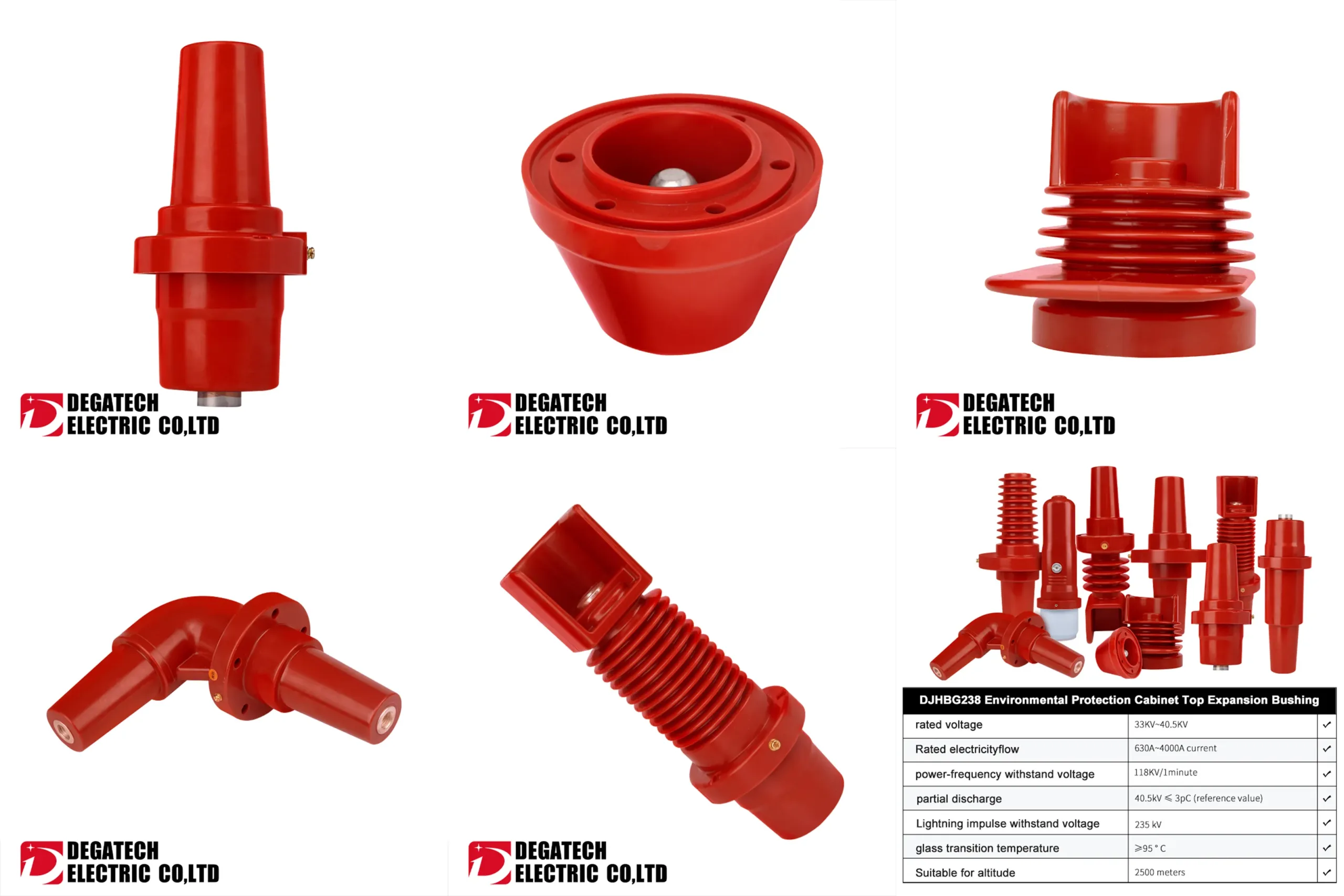
Epoxy resin molded insulation body
Integrated metal flange for enclosure mounting
Gas sealing O-rings or gaskets
External air-side insulation profile
The epoxy body is usually vacuum-cast to eliminate air bubbles and ensure partial discharge-free performance.
Electrical Ratings and Insulation Levels
For 24 kV indoor SF₆ GIS, wall bushings typically comply with the following insulation levels:
| Parameter | Typical Value |
|---|---|
| Rated voltage | 24 kV |
| Highest system voltage | 24 kV |
| Power frequency withstand | 50 kV |
| Lightning impulse withstand | 125 kV |
| Rated current | 630 A to 3150 A |
These values align with IEC 62271-1 and IEC 62271-200 requirements.
Insulation Coordination in SF₆ GIS Applications
Gas-Side Insulation
Inside the GIS tank, SF₆ gas provides very high dielectric strength. This allows:
Short internal clearances
Compact conductor spacing
Reduced bushing length on gas side
However, surface quality and conductor geometry must prevent electric field concentration.
Air-Side Insulation
On the external side, insulation relies on epoxy resin and air. Key considerations include:
Clearance distance
Creepage distance
Pollution level (usually light for indoor use)
Even for indoor installations, conservative creepage design improves long-term reliability.
Creepage and Clearance Design for Indoor Use
Typical design values for indoor 24 kV epoxy wall bushings:
| Parameter | Typical Requirement |
|---|---|
| Phase-earth clearance | ≥ 220 mm |
| Creepage distance | ≥ 480 mm |
| Pollution level | Light to medium |
| Installation | Indoor, controlled |
Although SF₆ GIS is sealed, the air-side surface remains exposed, so creepage design cannot be neglected.
Gas Sealing and Leak Tightness
Gas tightness is one of the most critical functions of a GIS wall bushing.
Key design features include:
Precision-machined metal flange
Double O-ring sealing system
SF₆-compatible elastomer materials
Controlled surface roughness
Typical leak rate requirements are ≤ 0.5% per year, in line with IEC standards.
Partial Discharge Performance
High-quality epoxy resin wall bushings are designed to be partial discharge-free under operating voltage.
Typical PD limits:
PD inception voltage ≥ 1.2 × rated voltage
PD magnitude ≤ 5 pC at test voltage
Low PD performance is essential to avoid long-term insulation degradation inside sealed GIS compartments.
Mechanical Strength and Installation Considerations
Epoxy resin wall bushings must withstand:
Tightening torque during installation
Thermal expansion of conductor
Mechanical vibration
Correct installation practices include:
Even torque application
Clean flange and gasket surfaces
Correct alignment of conductor
Improper installation is a common cause of premature failure.
Indoor GIS Environmental Advantages
Because the bushing is used in indoor SF₆ GIS, environmental stress is relatively low:
No UV exposure
Minimal pollution
Stable temperature
This allows epoxy resin to achieve long service life, often exceeding 30 years.
Standards and Compliance
Epoxy resin wall bushings for 24 kV SF₆ GIS typically comply with:
IEC 62271-1 – Common specifications
IEC 62271-200 – Metal-enclosed switchgear
IEC 60071 – Insulation coordination
IEC 60270 – Partial discharge measurement
Compliance ensures interchangeability and utility acceptance.
Common Failure Causes and Prevention
Typical Failure Causes
Poor epoxy casting quality
Inadequate sealing design
Surface contamination during installation
Incorrect torque application
Preventive Measures
Use PD-tested bushings
Follow manufacturer installation procedures
Perform gas leak testing
Maintain clean working conditions
Advantages Over Air-Insulated Wall Bushings
Compared with air-insulated designs, epoxy resin wall bushings offer:
Smaller size
Better insulation stability
Higher mechanical integration
Reduced maintenance
Improved gas sealing
These advantages align perfectly with the compact philosophy of SF₆ GIS.
Application Areas
Epoxy resin wall bushings for 24 kV SF₆ GIS are commonly used in:
Utility distribution substations
Industrial power systems
Compact indoor substations
Ring main units with GIS design
They are essential components wherever compact, sealed MV switchgear is required.
Conclusion
The epoxy resin wall bushing is a critical interface component in indoor 24 kV SF₆ gas-insulated switchgear. Its performance directly affects insulation integrity, gas containment, and long-term reliability of the entire GIS system.
By combining high dielectric strength, excellent gas sealing, compact design, and reliable mechanical performance, epoxy resin wall bushings meet the demanding requirements of modern medium-voltage GIS installations. Proper design, manufacturing quality, and installation practices ensure safe operation and extended service life in indoor environments.

Wind Substation Equipment: Types, Functions, and Selection Guide
Wind substation equipment plays a critical role in collecting, transforming, protecting, and transmitting electricity generated by wind turbines. From medium-voltage (MV) switchgear and power transformers to high-voltage (HV) equipment, protection [...]

Solar Farm Switchgear: Selection, Design, and Application Guide
Solar farm switchgear is an essential part of the electrical infrastructure used to collect, control, protect, and distribute power generated by photovoltaic (PV) systems. From inverter output circuits and transformer [...]

Future-Proof Switchgear: Design, Selection, and Long-Term Reliability
Future-proof switchgear is designed and selected to accommodate changing electrical loads, evolving technologies, operational requirements, and future expansion with minimal disruption. For industrial facilities, commercial buildings, utilities, renewable energy projects, [...]