

Custom MV Switchgear: Design, Options, and Selection Guide
The following is the table of contents for this article.
Thanks for sharing the article.
Medium-voltage electrical systems do not always fit a standard switchgear configuration. Projects can have different voltage levels, feeder arrangements, fault levels, protection schemes, cable entries, installation conditions, communication requirements, and space limitations.
Custom MV switchgear is medium-voltage switchgear configured or engineered to meet project-specific electrical, mechanical, protection, control, environmental, and installation requirements.
Instead of selecting an off-the-shelf lineup with fixed specifications, a customized solution can be developed around the project’s electrical architecture.
Typical applications include:
- Industrial plants
- Solar power plants
- Wind farms
- Battery energy storage systems
- Data centers
- Commercial infrastructure
- Utility substations
- Mining and processing facilities
What Is Custom MV Switchgear?
Custom MV switchgear is switchgear designed around a defined project specification rather than a generic standard configuration.
Customization can involve the:
- Electrical ratings
- Number of panels
- Busbar arrangement
- Feeder configuration
- Circuit breaker type
- Protection relay
- Metering
- Cable entry
- Enclosure
- Control system
- Communication interface
- Physical dimensions
A custom solution does not necessarily mean that every component is newly designed.
In many projects, manufacturers use a standardized switchgear platform and configure it with project-specific components and arrangements.
This can provide a balance between standardization and customization.
When Do You Need Custom MV Switchgear?
Standard MV switchgear can be appropriate when the project requirements match an available configuration.
Customization becomes more relevant when the project has unusual or tightly defined requirements.
Examples include:
Complex Feeder Arrangements
A project may require several incoming and outgoing feeders with a specific busbar arrangement.
Limited Installation Space
Electrical rooms can have strict dimensional constraints.
The switchgear lineup may therefore need a specific:
- Width
- Height
- Depth
- Cable-entry direction
- Panel arrangement
Special Protection Requirements
Utilities or industrial facilities may require specific protection schemes and relay functions.
Renewable Energy Projects
Solar and wind plants can require switchgear configured around collector feeders, transformers, grid connections, and plant control systems.
Data Centers
Critical facilities may require switchgear designed around redundant power paths, generators, UPS systems, and monitoring systems.
What Can Be Customized?
The exact customization options depend on the manufacturer’s product platform.
1. Electrical Ratings
Typical project-specific parameters include:
- Rated voltage
- Rated current
- Frequency
- Short-circuit breaking capacity
- Short-time withstand current
- Insulation level
Common MV voltage classes can include 12 kV, 24 kV, and 36 kV, depending on the electrical network and project requirements.
The correct rating should come from the project’s electrical studies.
2. Number of Panels
A custom lineup can be configured with different numbers of:
- Incoming panels
- Outgoing feeder panels
- Transformer panels
- Bus-coupler panels
- Metering panels
- PT/VT panels
The arrangement should reflect the project’s single-line diagram.
3. Busbar Configuration
Busbar arrangements can be customized according to system architecture.
Examples include:
- Single busbar
- Sectionalized busbar
- Bus coupler
- Multiple incoming supplies
The appropriate arrangement depends on the required operating and redundancy strategy.
Custom Busbar and Feeder Configuration
The single-line diagram should normally be the starting point for switchgear configuration.
For example:
Incoming 1 ──┐
             ├── Bus Section A ── Feeder 1
Incoming 2 ──┘                 ├─ Feeder 2
                               └─ Transformer
             Bus Coupler
Incoming 3 ─── Bus Section B ── Feeder 3
The actual configuration can be considerably more complex.
A manufacturer should review the project’s:
- Single-line diagram
- Load schedule
- Fault study
- Protection philosophy
- Cable schedule
- Control schematic
before finalizing the switchgear design.
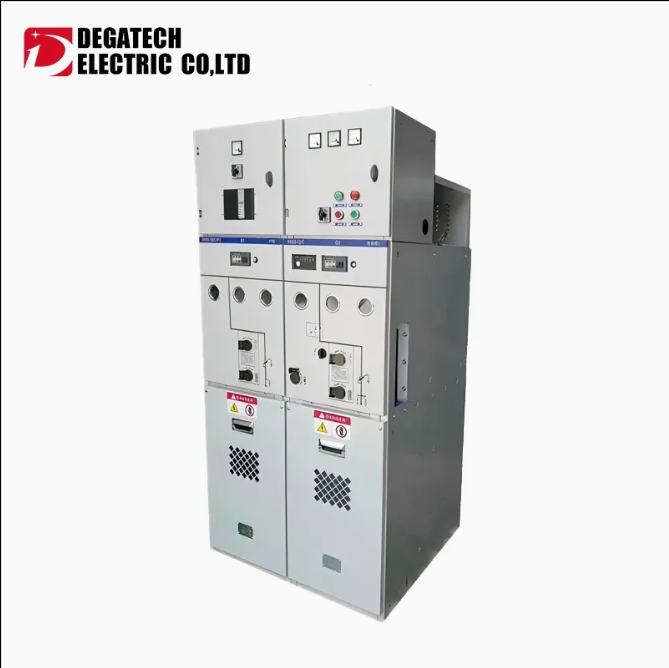
Custom MV Switchgear Voltage and Current Ratings
Voltage and current ratings are fundamental to MV switchgear selection.
Rated Voltage
The rated voltage should be compatible with the electrical system.
For example, projects can require MV switchgear in different voltage classes such as:
- 12 kV
- 24 kV
- 36 kV
The selected voltage class should be appropriate for the system’s operating voltage and applicable standards.
Rated Current
Rated current should accommodate the continuous load under the specified operating conditions.
It may be determined by:
- Transformer capacity
- Feeder load
- Generator capacity
- Renewable-energy output
- Busbar loading
- Future expansion
Short-Circuit Rating
This is particularly important.
Switchgear must be capable of withstanding and, where applicable, interrupting the prospective fault current at its installation point.
Relevant parameters can include:
- Short-circuit breaking current
- Short-time withstand current
- Peak withstand current
A custom enclosure cannot compensate for an incorrectly selected electrical rating.
Custom Protection and Control
Protection is one of the areas where project-specific customization can provide significant value.
Depending on the application, the switchgear can incorporate protection functions such as:
- Overcurrent
- Earth fault
- Undervoltage
- Overvoltage
- Transformer protection
- Motor protection
- Directional protection
- Busbar protection
The exact functions should be established through an electrical protection study.
Protection Relays
A project can specify a particular relay manufacturer or model when required for system integration.
The switchgear manufacturer may then provide:
- Relay mounting
- CT wiring
- VT wiring
- Trip circuits
- Control circuits
- Communication
- Interlocking
The relay settings themselves should be established by the responsible protection engineer.
Custom MV Switchgear for Renewable Energy
Renewable-energy projects are an important application for customized MV switchgear.
Solar Power Plants
A solar project can require switchgear for:
- MV collector feeders
- Transformer feeders
- Auxiliary power
- Grid connection
- Bus sections
A typical arrangement is:
Inverter → Transformer → MV Collector → Solar Substation → Grid
The number and configuration of switchgear panels depend on the plant architecture.
Wind Farms
Wind projects can use MV switchgear to collect electricity from multiple turbines.
A typical path is:
Wind Turbine → Turbine Transformer → MV Collection Feeder → Wind Farm Substation
The switchgear can be configured around the number of collection circuits and transformer arrangements.
Battery Energy Storage
BESS projects can require MV switchgear between:
Battery System → PCS → Transformer → MV Switchgear → Grid
Protection and control requirements can differ from those of conventional loads.
Custom MV Switchgear for Data Centers
Data centers often have strict requirements for power availability and maintainability.
Custom MV switchgear can be configured for:
- Multiple utility feeders
- Generator connections
- Transformer feeders
- Bus couplers
- Redundant power paths
- Protection coordination
- Digital monitoring
A simplified architecture could be:
Utility A → MV Switchgear A → Transformer A
Utility B → MV Switchgear B → Transformer B
The final architecture depends on the facility’s electrical design and redundancy objectives.
Digital Monitoring
A customized switchgear lineup can incorporate:
- Digital protection relays
- Power meters
- Breaker status monitoring
- Remote control
- Communication interfaces
- Event recording
This can support integration with SCADA or electrical monitoring systems.
SF6-Free Custom MV Switchgear
Customization can also involve the insulation and interruption technology.
Where technically appropriate, buyers can specify SF6-free MV switchgear.
Possible technologies include:
- Vacuum circuit breakers
- Air insulation
- Solid insulation
- Other alternative insulation technologies
When specifying an SF6-free solution, buyers should define what “SF6-free” means for the complete assembly and request appropriate technical documentation.
The equipment must still satisfy the required electrical ratings, testing requirements, environmental conditions, and applicable standards.
IEC 62271 Requirements
For many MV switchgear applications, relevant parts of the IEC 62271 series may apply.
Depending on the equipment, standards can address:
- Common specifications
- AC circuit breakers
- Disconnectors
- Earthing switches
- Metal-enclosed switchgear
- Gas-insulated switchgear
- Other high-voltage switching equipment
For metal-enclosed MV switchgear, IEC 62271-200 can be particularly relevant within its stated scope.
A project specification should identify the applicable standard and edition rather than simply stating “IEC 62271.”
Internal Arc Classification
Where required, buyers may specify internal arc classification according to the applicable standard and installation arrangement.
The classification relates to tested performance under specified internal-arcing conditions.
It should be considered together with:
- Room layout
- Accessibility
- Pressure-relief arrangements
- Installation configuration
- Personnel protection requirements
Custom MV Switchgear Design Process
A well-managed customization process usually begins with project documentation.
Step 1: Provide the Single-Line Diagram
The SLD establishes:
- Incoming supplies
- Feeders
- Transformers
- Busbars
- Couplers
- Loads
Step 2: Define Electrical Ratings
Provide:
- Voltage
- Current
- Short-circuit level
- Frequency
- Insulation requirements
Step 3: Define Protection
Specify the protection philosophy and required relay functions.
Step 4: Define Physical Requirements
Include:
- Indoor/outdoor
- Available space
- Cable entry
- Access requirements
- Enclosure requirements
Step 5: Define Automation
Specify:
- SCADA
- Communication protocols
- Remote operation
- Metering
- Monitoring
Step 6: Engineering Review
The manufacturer can then develop:
- General arrangement drawings
- Single-line diagrams
- Wiring diagrams
- Protection schematics
- Bill of materials
- Technical datasheets
Step 7: Testing and Acceptance
The project can specify applicable factory tests and documentation requirements.
How to Choose a Custom MV Switchgear Supplier
Supplier selection is just as important as the switchgear specification.
Consider the following areas.
Engineering Capability
Can the supplier review:
- SLDs
- Load calculations
- Protection requirements
- Interface requirements
- Installation constraints?
Manufacturing Capability
Evaluate:
- Production capacity
- Quality control
- Assembly processes
- Testing facilities
Standards Compliance
Confirm which standards and editions apply to the proposed equipment.
Testing Documentation
Ask for appropriate type-test evidence and routine-test documentation.
Project Experience
Look for relevant experience with applications such as:
- Solar
- Wind
- BESS
- Data centers
- Industrial plants
- Utility distribution
Experience should be verified rather than assumed from marketing claims.
After-Sales Support
Consider:
- Spare parts
- Technical support
- Commissioning assistance
- Maintenance documentation
- Warranty terms
Custom MV Switchgear Procurement Checklist
Before sending an RFQ, prepare the following information:
Electrical
- System voltage
- Rated current
- Frequency
- Short-circuit level
- Insulation level
- Earthing system
Configuration
- Number of panels
- Incoming feeders
- Outgoing feeders
- Transformer feeders
- Bus coupler
- Metering requirements
Protection
- Protection functions
- CT specifications
- VT specifications
- Relay requirements
- Interlocking
Mechanical
- Indoor/outdoor
- Dimensions
- Cable entry
- Enclosure
- Access requirements
Digital
- SCADA
- Communication protocol
- Remote control
- Metering
- Condition monitoring
Environmental
- Temperature
- Altitude
- Humidity
- Pollution
- Corrosion
- SF6-free requirement
Frequently Asked Questions
What is custom MV switchgear?
Custom MV switchgear is medium-voltage switchgear configured or engineered according to project-specific electrical, mechanical, protection, control, environmental, and installation requirements.
Why choose custom MV switchgear instead of standard switchgear?
Customization can be useful when a project has specific feeder arrangements, space limitations, protection requirements, communication needs, environmental conditions, or grid specifications that do not match a standard configuration.
What can be customized in MV switchgear?
Depending on the manufacturer, customization can include voltage and current ratings, panel quantity, busbar configuration, circuit breakers, protection relays, metering, cable entry, dimensions, control systems, communication, and enclosure requirements.
What voltage levels are available for custom MV switchgear?
The available voltage depends on the manufacturer’s product platform. Common MV voltage classes include 12 kV, 24 kV, and 36 kV, but the appropriate rating depends on the project electrical system.
Can custom MV switchgear use vacuum circuit breakers?
Yes. Vacuum circuit breakers can be incorporated into suitable medium-voltage switchgear designs and are widely used in MV applications.
Can custom MV switchgear be SF6-free?
Yes. Where suitable technology is available, custom MV switchgear can be specified using vacuum interruption and alternative insulation technologies without SF6. Buyers should verify the complete assembly’s configuration.
Is custom MV switchgear suitable for solar power plants?
Yes. It can be configured for solar collector feeders, transformer feeders, auxiliary supplies, bus sections, and grid interconnections.
Can custom MV switchgear be used in wind farms?
Yes. It can be configured around turbine collection feeders, transformers, MV buses, and grid connection requirements.
Can custom MV switchgear be used in data centers?
Yes. Custom configurations can support multiple utility sources, transformers, generators, redundant power paths, protection systems, and digital monitoring.
What documents are needed to design custom MV switchgear?
Commonly required information includes a single-line diagram, load schedule, voltage and current ratings, short-circuit study, protection requirements, cable information, physical constraints, control requirements, and applicable standards.
Does custom switchgear need IEC 62271 compliance?
The applicable requirements depend on the equipment and project. Relevant parts of the IEC 62271 series commonly apply to MV switchgear and controlgear. The exact standard should be identified in the technical specification.
How long does custom MV switchgear take to manufacture?
Lead time varies by manufacturer, configuration, component availability, testing requirements, project quantity, and approval process. A supplier should provide a project-specific manufacturing schedule rather than relying on a generic estimate.
Conclusion
Custom MV switchgear provides a practical approach when a project’s electrical distribution requirements go beyond a standard switchgear configuration.
Customization can cover:
- Voltage and current ratings
- Short-circuit capability
- Panel configuration
- Busbar arrangement
- Circuit breakers
- Protection relays
- Metering
- SCADA and communications
- Physical dimensions
- Cable entry
- Environmental requirements
- SF6-free technology
The most effective approach is to start with the project’s single-line diagram, electrical studies, protection philosophy, installation conditions, and applicable standards.
For solar farms, wind farms, BESS projects, data centers, industrial facilities, and utility substations, the switchgear should be engineered as part of the complete electrical system rather than treated as an isolated product.
When evaluating a custom MV switchgear supplier, buyers should assess engineering capability, manufacturing quality, applicable IEC 62271 requirements, testing documentation, project experience, and after-sales support.

Wind Substation Equipment: Types, Functions, and Selection Guide
Wind substation equipment plays a critical role in collecting, transforming, protecting, and transmitting electricity generated by wind turbines. From medium-voltage (MV) switchgear and power transformers to high-voltage (HV) equipment, protection [...]

Solar Farm Switchgear: Selection, Design, and Application Guide
Solar farm switchgear is an essential part of the electrical infrastructure used to collect, control, protect, and distribute power generated by photovoltaic (PV) systems. From inverter output circuits and transformer [...]

Future-Proof Switchgear: Design, Selection, and Long-Term Reliability
Future-proof switchgear is designed and selected to accommodate changing electrical loads, evolving technologies, operational requirements, and future expansion with minimal disruption. For industrial facilities, commercial buildings, utilities, renewable energy projects, [...]