
How Long Does a Vacuum Interrupter Last? Service Life Explained
The following is the table of contents for this article.
Thanks for sharing the article.
A vacuum interrupter can have a long service life, but there is no single number that applies to every vacuum interrupter. Its life depends on the manufacturer’s design, rated voltage and current, number and type of switching operations, interrupted fault current, contact wear, vacuum integrity, and operating conditions. Buyers should therefore check the manufacturer’s specified electrical and mechanical endurance rather than relying on a generic lifespan figure.
This distinction is particularly important because a vacuum interrupter is only one part of a vacuum circuit breaker (VCB).
The interrupter may have a specified electrical endurance, while the complete circuit breaker also has a separate mechanical endurance and maintenance schedule.
What Is a Vacuum Interrupter?
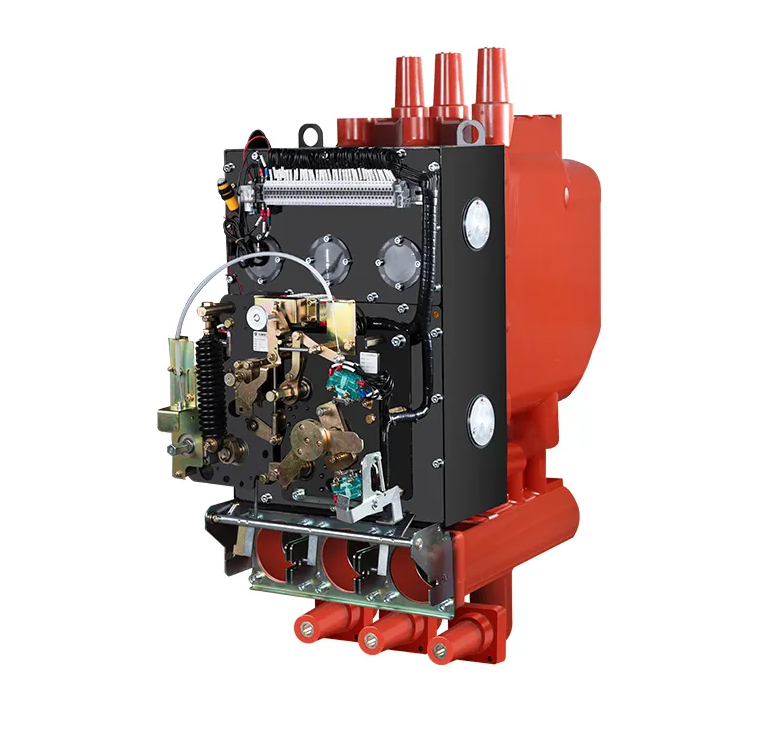
A vacuum interrupter is the component inside a vacuum circuit breaker that interrupts electrical current.
It contains electrical contacts sealed inside a vacuum envelope.
When the circuit breaker opens, the contacts separate and the resulting arc is extinguished in the vacuum.
The interrupter typically includes:
- Fixed contact
- Moving contact
- Contact stem
- Vacuum envelope
- Shield
- Bellows
- Terminal connections
The sealed construction is important because the vacuum condition must remain suitable throughout the component’s service life.
Vacuum interrupters are widely used in medium-voltage switchgear.
Electrical Life vs Mechanical Life
One of the most important things to understand is that mechanical life and electrical life are not the same.
Mechanical Life
Mechanical endurance refers to how many operating cycles the switching mechanism and associated mechanical components can complete under specified test conditions.
The breaker may open and close without interrupting significant fault current.
Electrical Life
Electrical endurance relates to switching operations where the breaker interrupts current.
Interrupting current causes contact erosion and electrical stress.
A breaker that performs many normal switching operations may experience a different level of wear from one that frequently interrupts high fault currents.
Therefore, a manufacturer may specify separate endurance values for:
- Mechanical operations
- Electrical operations
- Short-circuit interruptions
This is why simply asking “How many years does a vacuum interrupter last?” does not provide the complete answer.
What Determines Vacuum Interrupter Life?
Several factors can affect the service life of a vacuum interrupter.
1. Number of Switching Operations
Every opening and closing operation contributes to mechanical wear somewhere in the circuit breaker.
Repeated electrical switching can also contribute to contact wear.
A breaker used frequently will therefore experience a different duty cycle from a breaker that operates only occasionally.
2. Current Being Interrupted
Interrupting a normal load current is generally a different duty from interrupting a high short-circuit current.
Higher interruption duty can produce greater electrical stress and contact erosion.
The manufacturer’s rated electrical endurance should therefore be considered alongside the expected switching duty.
3. Short-Circuit Interruptions
Fault interruption is an important part of circuit-breaker service life.
A breaker may be capable of interrupting a specified short-circuit current, but that does not mean it can interrupt that level indefinitely without affecting its remaining electrical endurance.
After significant fault interruptions, the manufacturer’s inspection and maintenance requirements should be followed.
4. Contact Erosion
The contacts inside the vacuum interrupter gradually experience wear as they interrupt current.
Modern contact materials and interrupter designs are engineered to control this wear.
However, contact erosion remains an important factor in electrical endurance.
5. Vacuum Integrity
The vacuum inside the interrupter must remain within the required performance range.
If vacuum integrity deteriorates, the interrupter’s dielectric and interruption performance can be affected.
The sealed construction is therefore a critical part of the interrupter’s reliability.
6. Operating Environment
The interrupter itself is sealed, but the complete circuit breaker operates in an external environment.
Conditions such as:
- High temperature
- Humidity
- Dust
- Corrosive atmosphere
- High altitude
- Mechanical vibration
can affect the wider switchgear system.
For outdoor or harsh industrial installations, the complete equipment specification matters.
Switching Operations and Contact Wear
A common misunderstanding is that every breaker operation causes the same amount of wear.
It does not.
Consider two hypothetical applications.
Application A: Normal Feeder Switching
A VCB may perform relatively infrequent switching operations under normal load conditions.
The electrical stress may be comparatively moderate.
Application B: Frequent Fault Interruption
Another breaker may operate in a network where it has already interrupted several significant fault currents.
The electrical stress on the interrupter can be much greater.
Both breakers may have been installed for the same number of calendar years, but their remaining electrical endurance could be different.
This is why operating history matters more than calendar age alone.
Fault Current and Interruption Duty
Short-circuit interruption is one of the most important conditions to consider when evaluating a vacuum interrupter.
Suppose a VCB has a rated short-circuit breaking current appropriate for a particular medium-voltage system.
That rating defines its capability under specified test conditions.
It does not mean that the breaker can repeatedly interrupt the maximum rated fault current indefinitely without consideration of its electrical endurance.
After a significant fault, maintenance personnel should follow the manufacturer’s inspection requirements.
Some manufacturers specify inspection or replacement criteria based on:
- Number of interruptions
- Interrupted current
- Contact wear
- Electrical endurance
- Test results
The exact criteria vary by product.
Vacuum Integrity and Contact Erosion
Two areas receive particular attention during the life of a vacuum interrupter:
vacuum integrity and contact condition.
Vacuum Integrity
A vacuum interrupter is manufactured as a sealed unit.
The manufacturer designs the enclosure and sealing system to maintain the required vacuum over the intended service life.
A loss of vacuum can reduce dielectric strength and interrupting performance.
Contact Condition
The contacts gradually erode as current is interrupted.
The interrupter design typically incorporates contact materials and geometry intended to provide the required electrical endurance.
Some VCB designs also provide ways to assess contact wear through the breaker mechanism or manufacturer-specific inspection procedures.
Does a Vacuum Interrupter Need Maintenance?
The vacuum interrupter itself is a sealed component and is not normally serviced by adding or replacing an internal insulating medium in the way some gas-insulated equipment may require gas-related servicing.
However, the complete vacuum circuit breaker still requires maintenance.
Maintenance can include inspection of:
- Operating mechanism
- Mechanical linkages
- Control circuits
- Auxiliary contacts
- Electrical connections
- Interlocks
- Insulation surfaces
- Contact wear indicators
- Operating times
The manufacturer’s maintenance schedule should always take priority.
The fact that a VCB uses a vacuum interrupter does not mean the entire switchgear assembly is maintenance-free.
Signs That a Vacuum Interrupter Needs Attention
A maintenance team may investigate the breaker if there are signs such as:
- Abnormal operating time
- Unusual mechanical noise
- Failure to open or close correctly
- Excessive contact wear
- Abnormal insulation-test results
- Protection or control abnormalities
- Evidence of previous high-current fault interruption
These symptoms do not automatically prove that the vacuum interrupter has failed.
They indicate that the complete circuit breaker should be evaluated using the manufacturer’s procedures and appropriate test equipment.
How to Check the Manufacturer’s Rated Life
When purchasing vacuum circuit breakers, do not ask only:
“How many years does the vacuum interrupter last?”
Instead, request the following information.
Electrical Endurance
Ask for the rated number of electrical operations under the applicable test conditions.
Mechanical Endurance
Ask for the mechanical endurance classification or specified operating-cycle capability.
Short-Circuit Endurance
Ask how the manufacturer specifies the relationship between fault interruptions and electrical endurance.
Contact Wear Criteria
Determine how the manufacturer identifies the allowable contact wear.
Maintenance Interval
Request the recommended inspection and maintenance schedule for the complete VCB.
Replacement Criteria
Ask when the manufacturer recommends replacement of the interrupter or other major breaker components.
This information is far more useful for procurement than a generic statement such as “20-year life.”
Vacuum Interrupter vs Complete VCB Service Life
Another important distinction is between component life and equipment life.
A vacuum interrupter can remain electrically capable while another part of the breaker requires maintenance.
For example, the complete VCB includes:
- Vacuum interrupter
- Operating mechanism
- Closing mechanism
- Opening mechanism
- Springs
- Control coils
- Auxiliary switches
- Mechanical linkages
- Protection and control interfaces
These components have different wear mechanisms.
Therefore:
The service life of a vacuum interrupter should not be treated as the same thing as the service life of the complete vacuum circuit breaker.
For a substation owner, the complete equipment lifecycle is the more useful consideration.
How to Extend Vacuum Circuit Breaker Service Life
There are several practical ways to protect the service life of a VCB.
Follow the Manufacturer’s Maintenance Schedule
Do not wait for a failure before inspecting the equipment.
Record Switching Operations
Maintaining an operation history can help maintenance teams understand the breaker duty.
Record Fault Interruptions
Significant fault interruptions should be documented.
Monitor Operating Performance
Abnormal opening and closing times can provide useful maintenance information.
Keep Connections in Good Condition
Loose or deteriorated electrical connections can create additional problems for the complete breaker.
Control the Installation Environment
Where possible, protect the switchgear from excessive humidity, dust, contamination, and other environmental stresses.

Why Service Life Matters When Choosing a VCB
For distributors and EPC contractors, service life can affect the overall value of a switchgear product.
When comparing manufacturers, consider more than the purchase price.
Review:
- Electrical endurance
- Mechanical endurance
- Short-circuit rating
- Maintenance requirements
- Interrupter replacement procedure
- Spare-parts availability
- Technical documentation
- Operating mechanism design
- After-sales support
A product with clear lifecycle documentation can be easier to specify and support over many years.
Frequently Asked Questions
How long does a vacuum interrupter last?
There is no universal lifespan. The service life depends on the interrupter design, switching duty, fault interruptions, contact wear, vacuum integrity, and manufacturer specifications.
Does a vacuum interrupter wear out?
Yes. Electrical switching can cause contact erosion, while the complete breaker also experiences mechanical wear. The manufacturer defines acceptable endurance and inspection or replacement criteria.
How many operations can a vacuum circuit breaker perform?
The number depends on the specific VCB. Manufacturers specify mechanical and electrical endurance based on defined test conditions. Buyers should use the product’s datasheet rather than a generic number.
Does a vacuum interrupter need to be refilled?
No. A vacuum interrupter is a sealed component manufactured to maintain its internal vacuum. It is not normally serviced by refilling it like a gas-insulated system.
How do you know if a vacuum interrupter is bad?
Potential indicators include abnormal breaker operation, failed electrical tests, excessive contact wear, or other manufacturer-defined inspection results. Proper testing should be performed according to the manufacturer’s procedures.
Does a VCB require maintenance?
Yes. Although the vacuum interrupter is sealed, the complete vacuum circuit breaker contains mechanical, electrical, and control components that require inspection and maintenance.
Does a fault reduce the life of a vacuum interrupter?
A significant fault interruption can contribute to electrical wear. The effect depends on the interrupted current and the manufacturer’s rated electrical endurance.
Can a vacuum interrupter last for decades?
It can have a long operational life when properly designed, applied, operated, and maintained, but a specific calendar-life claim should come from the manufacturer for the particular product.
Is vacuum switchgear maintenance-free?
No. Vacuum switchgear can reduce certain maintenance requirements associated with other interruption or insulation technologies, but the complete switchgear still requires appropriate inspection and maintenance.
Conclusion
How long does a vacuum interrupter last? There is no single number that applies to every product.
The better way to evaluate service life is to look at electrical endurance, mechanical endurance, switching frequency, fault-interruption duty, contact wear, vacuum integrity, and the manufacturer’s maintenance requirements.
For distributors and EPC contractors, this distinction is especially important when comparing vacuum circuit breaker suppliers.
A strong technical specification should request the manufacturer’s rated electrical and mechanical endurance, short-circuit performance, contact-wear criteria, inspection procedures, and replacement recommendations.
Most importantly, don’t confuse the life of the vacuum interrupter with the life of the complete VCB. The interrupter is a critical component, but the circuit breaker also contains mechanisms and control components that determine the overall lifecycle of the equipment.

Wind Substation Equipment: Types, Functions, and Selection Guide
Wind substation equipment plays a critical role in collecting, transforming, protecting, and transmitting electricity generated by wind turbines. From medium-voltage (MV) switchgear and power transformers to high-voltage (HV) equipment, protection [...]

Solar Farm Switchgear: Selection, Design, and Application Guide
Solar farm switchgear is an essential part of the electrical infrastructure used to collect, control, protect, and distribute power generated by photovoltaic (PV) systems. From inverter output circuits and transformer [...]

Future-Proof Switchgear: Design, Selection, and Long-Term Reliability
Future-proof switchgear is designed and selected to accommodate changing electrical loads, evolving technologies, operational requirements, and future expansion with minimal disruption. For industrial facilities, commercial buildings, utilities, renewable energy projects, [...]