
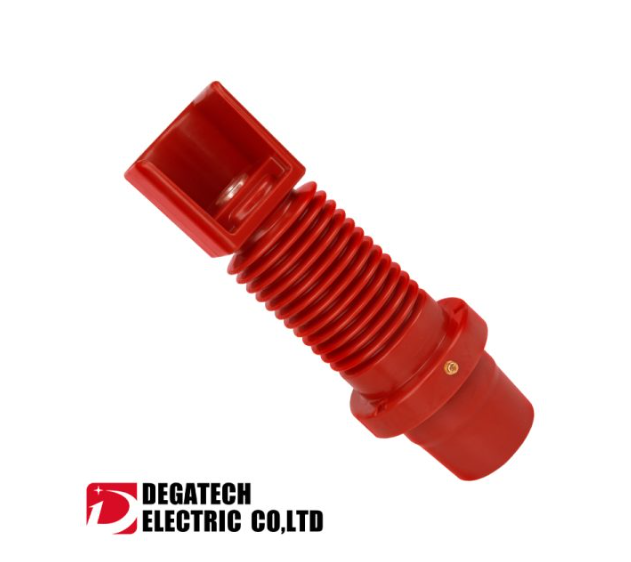
12KV/24KV Epoxy Resin Bushing: Key Insights
The following is the table of contents for this article.
Thanks for sharing the article.
Powerful 10-Point Guide to 12KV/24KV Epoxy Resin Bushing for Reliable Medium Voltage Systems
Outline
| Section | Description |
|---|---|
| Introduction | Importance of epoxy bushings |
| 12KV/24KV Epoxy Resin Bushing | Definition |
| Material Characteristics | Epoxy insulation |
| Structural Design | Internal/External design |
| Manufacturing Process | Casting methods |
| Electrical Performance | MV insulation rating |
| Mechanical Strength | Durability factors |
| Thermal Properties | Heat resistance |
| Partial Discharge Control | PD suppression |
| Creepage Distance | Insulation surface design |
| Installation Techniques | Mounting methods |
| Applications in Switchgear | MV equipment usage |
| Use in Transformers | Medium voltage transformers |
| Use in Capacitor Banks | HV capacitors |
| Use in GIS/AIS Systems | Compatibility |
| Quality Testing | Factory testing |
| Failure Modes | Common bushing failures |
| Maintenance Practices | Routine tasks |
| Advantages | Benefits |
| Limitations | Drawbacks |
| Standards & Certifications | IEC, IEEE |
| Comparison with Porcelain | Material comparison |
| Epoxy vs. Silicone Bushing | Technical differences |
| Future Development | Trends |
| FAQs | Answers |
| Conclusion | Summary |
12KV/24KV Epoxy Resin Bushing
A 12KV/24KV Epoxy Resin Bushing is a medium-voltage insulating component used to safely pass electrical conductors through grounded barriers such as switchgear panels, transformer walls, or capacitor compartments. Because modern electrical networks demand compact, reliable, and high-performance insulation solutions, epoxy-resin bushings have become the industry standard for 12 kV and 24 kV equipment. Their molded structure, strong dielectric properties, and moisture resistance allow them to excel in challenging industrial environments.
The bushing not only insulates but also provides mechanical support for conductors, ensuring stable connection between high-voltage components. Since medium-voltage equipment requires robust insulation to handle switching surges and environmental stresses, epoxy resin bushings offer an ideal blend of strength, precision, and safety.
Material Characteristics of Epoxy Resin
Epoxy resin plays a vital role in achieving the excellent performance of 12KV/24KV bushings. The material possesses:
High dielectric strength
Excellent resistance to chemicals
Low water absorption
Strong adhesion to embedded conductors
Good mechanical rigidity
Long-term electrical stability
These properties make epoxy resin reliable in humid, dusty, or corrosive environments where porcelain or other materials may degrade. Additionally, epoxy is lightweight, allowing switchgear and transformer designs to become more compact and portable.

Structural Design of 12KV/24KV Epoxy Resin Bushing
The typical structure includes:
Internal conductor interface
Epoxy molded body
Creepage-optimized external surface
Casting-embedded fittings
Mounting flange
Internal tunnel for conductor
Design focuses on achieving high creepage distance and reducing partial discharge. The smooth epoxy surface helps prevent flashover, especially in outdoor or high-humidity environments.
Some bushings include capacitive grading layers to distribute electric fields uniformly, ensuring superior dielectric reliability.
Manufacturing Process
Manufacturing of epoxy resin bushings typically involves:
Epoxy vacuum casting
Silicone mold formation
Degassing and curing
Precision machining of interfaces
Quality inspection
Vacuum casting eliminates air bubbles, significantly reducing partial discharge and improving dielectric strength. Curing cycles ensure a strong molecular structure capable of withstanding high temperature and electrical stress.
Electrical Performance
Electrical properties highlight why epoxy bushings are ideal for 12kV and 24kV equipment:
| Parameter | Typical Value |
|---|---|
| Rated Voltage | 12 / 24 kV |
| Power Frequency Withstand | 42–65 kV |
| Lightning Impulse | 75–125 kV |
| Partial Discharge Level | < 5 pC |
| Insulation Class | MV Indoor/Outdoor |
The low PD characteristics allow systems to maintain long-term reliability under switching impulses and harmonic distortions.
Mechanical Strength
Epoxy bushings also exhibit strong mechanical performance:
High tensile strength
High flexural resistance
Excellent dimensional stability
Vibration tolerance
These characteristics are crucial in transformers, GIS/AIS switchgear, and capacitor banks that experience mechanical vibrations or thermal expansion.
Thermal Properties
Epoxy remains stable within a wide temperature range, enabling installation in various climates:
Operating range: –40°C to +120°C
Heat deflection temperature: up to 120°C
Strong thermal shock resistance
The material does not melt or deform under high electrical loads, improving equipment reliability.
Partial Discharge Control
Partial discharge (PD) can damage insulation over time. Epoxy bushings minimize PD through:
Smooth, bubble-free molded surfaces
High-quality vacuum casting
Uniform electrical field distribution
Moisture-resistant design
Stable PD performance enhances long-term insulation life.
Creepage Distance Optimization
Creepage distance is critical in high-voltage environments. Epoxy bushings optimize creepage using:
Ribbed outer shapes
Hydrophobic surfaces
Arc-resistant material
Compliant distances per IEC standards
This prevents flashover during humidity or pollution.
Installation Techniques
Bushings can be installed through:
Bolt-on flanges
Embedded mounting bases
Panel-through openings
Clamp brackets
Proper torque settings, sealing gaskets, and conductor alignment are essential to ensure insulation integrity.
Applications in Switchgear
12KV/24KV epoxy resin bushings are widely used in:
Ring Main Units (RMU)
KYN28 cabinets
Withdrawable VCB compartments
AIS switchgear panels
Contact junctions between busbars and breakers
They act as critical connection points for conducting high-voltage power within compact metal-enclosed environments.
Use in Transformers
Transformers require bushings to connect windings to external conductors:
12kV distribution transformers
24kV compact substation transformers
Pad-mounted transformers
Dry-type transformers
Epoxy bushing designs ensure low PD and strong mechanical anchoring.

Use in Capacitor Banks
Capacitor banks rely on epoxy bushings for:
Connecting capacitor units
Ensuring insulation between phases
Managing harmonic currents
Handling switching surges
Epoxy material resists thermal stress caused by capacitive operation.
Use in GIS/AIS Systems
Epoxy bushings serve as:
GIS panel penetrations
AIS busbar interfaces
Transition insulating components
Their stable dielectric performance ensures safety in compact or outdoor systems.
Quality Testing
Factory tests include:
Partial discharge measurement
Power frequency withstand test
Impulse test
Visual Inspection
Dimensional accuracy
Mechanical torque testing
Insulation resistance measurement
Only bushings passing all tests are approved for service.
Common Failure Modes
Despite their quality, failures can occur due to:
Improper installation
Internal air bubbles
Excessive contamination
Overvoltage surges
Mechanical cracks
Aging from thermal stress
Early detection prevents catastrophic equipment failure.
Maintenance Practices
Maintenance includes:
Regular cleaning
Infrared thermography
PD monitoring
Tightening mounting bolts
Checking cracks or discoloration
Epoxy bushings typically require very little maintenance.
Advantages of Epoxy Bushings
Lightweight
Compact design
High dielectric strength
Excellent environmental resistance
Low PD
Safe and non-fragile
Long lifespan
These advantages make epoxy bushings preferable to porcelain in most MV applications.
Limitations
UV exposure can degrade resin
Not ideal for extreme outdoor pollution without coatings
Sensitive to impact during transport
However, design improvements continue to address these issues.
Standards & Certifications
Manufacturing follows:
IEC 60137
IEC 62271 series
IEEE C57
National Grid codes
Standards ensure the safety and reliability of insulation components.
Comparison with Porcelain Bushings
| Feature | Epoxy | Porcelain |
|---|---|---|
| Weight | Light | Heavy |
| Strength | High | Brittle |
| Pollution Resistance | Good | Very good |
| Cost | Lower | Higher |
Epoxy is now preferred for indoor MV systems.
Epoxy vs. Silicone Bushings
Silicone bushings offer outdoor hydrophobicity, while epoxy offers stronger structural rigidity. Each material has its strengths depending on the application.
Future Development
Nano-filled epoxy
3D printed molds
Higher PD resistance
Eco-friendly materials
Smart-condition monitoring
Innovation will continue pushing epoxy bushing performance to new levels.
FAQs
What is a 12kV/24kV epoxy resin bushing used for?
It insulates conductors passing through grounded barriers in MV equipment.
Is epoxy better than porcelain?
For indoor MV systems, yes—lighter, stronger, and safer.
Does epoxy resist moisture?
Yes, epoxy has low water absorption.
Can it be used outdoors?
Yes, but requires UV-resistant coatings.
How long does an epoxy bushing last?
Typically 20–30 years under proper conditions.
Does the bushing require maintenance?
Only periodic inspection and cleaning.
Conclusion
The 12KV/24KV Epoxy Resin Bushing plays a pivotal role in medium-voltage power systems by providing robust insulation and mechanical support. Its combination of dielectric strength, mechanical durability, and environmental resistance makes it indispensable in switchgear, transformers, capacitor banks, and substations. As power distribution networks become more compact and intelligent, epoxy resin bushings will continue evolving with enhanced materials, improved manufacturing, and advanced monitoring technologies. Ultimately, they remain one of the most reliable and efficient insulation components in modern electrical engineering.
Inbound Link Suggestions
Link to your switchgear product pages
Link to your epoxy insulation components
Link to maintenance guidelines pages
Outbound Link Suggestions
IEC standards overview
Transformer insulation technology articles
Medium-voltage switchgear technical references

Wind Substation Equipment: Types, Functions, and Selection Guide
Wind substation equipment plays a critical role in collecting, transforming, protecting, and transmitting electricity generated by wind turbines. From medium-voltage (MV) switchgear and power transformers to high-voltage (HV) equipment, protection [...]

Solar Farm Switchgear: Selection, Design, and Application Guide
Solar farm switchgear is an essential part of the electrical infrastructure used to collect, control, protect, and distribute power generated by photovoltaic (PV) systems. From inverter output circuits and transformer [...]

Future-Proof Switchgear: Design, Selection, and Long-Term Reliability
Future-proof switchgear is designed and selected to accommodate changing electrical loads, evolving technologies, operational requirements, and future expansion with minimal disruption. For industrial facilities, commercial buildings, utilities, renewable energy projects, [...]