
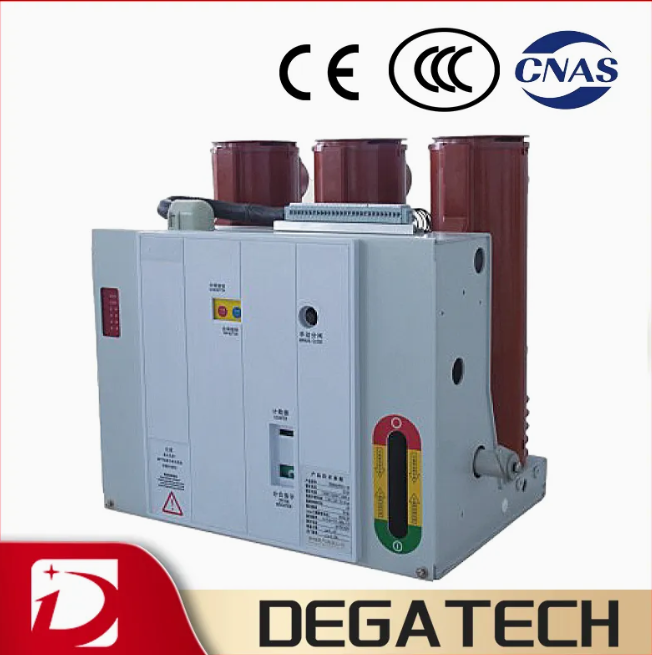
Vacuum Circuit Breaker Letter Designations Explained: Guide & Selection
The following is the table of contents for this article.
Thanks for sharing the article.
What Does the Letter Designation on Vacuum Circuit Breakers Mean? A Comprehensive Guide
Vacuum Circuit Breakers (VCBs) have become a cornerstone in medium-voltage power systems worldwide. Their high reliability, long operational life, and eco-friendly arc interruption make them indispensable in modern electrical distribution networks. Yet, when engineers, designers, or procurement teams encounter model codes such as ZN63, VS1, ZW32, or VB2, they often face confusion.
These letter and number designations are not arbitrary. Each element provides essential information regarding the installation type, mechanism, voltage rating, environmental suitability, and overall performance characteristics. Understanding these codes is critical for selecting the right breaker, optimizing system design, and ensuring long-term operational safety.
This guide explains the meaning behind the letter designations of VCBs, their engineering significance, application scenarios, and how leading brands like Degatech are implementing innovations for the next generation of eco-friendly, high-performance VCBs.
Why Letter Designations Matter in VCB Selection
Choosing the incorrect VCB model can lead to operational and safety challenges:
Mismatched installation interfaces
Reduced dielectric or mechanical performance
Increased maintenance and lifecycle costs
Higher probability of system downtime
Non-compliance with modern electrical standards
Letter designations simplify these considerations by conveying key technical information upfront. When properly interpreted, these codes provide engineers with a reliable roadmap to select breakers that align with system voltage, current, environmental conditions, and maintenance strategies.
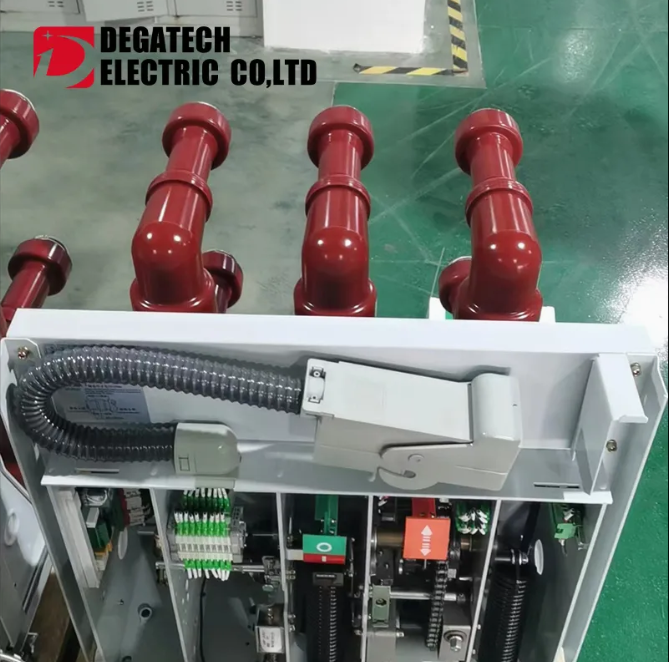
Common Letter Codes in Vacuum Circuit Breakers
Understanding the letters used in VCB models is fundamental. The table below summarizes widely recognized letter designations used in medium-voltage VCBs:
| Letter | Meaning | Engineering Context |
|---|---|---|
| Z | Indoor installation | Suitable for enclosed switchgear rooms, ensuring protection from dust, moisture, and external impacts |
| W | Outdoor installation | Designed for weather-proof environments and outdoor substations |
| N | Spring operating mechanism | Energy storage type offering consistent mechanical performance |
| G | Fixed type | Non-withdrawable, bolted installation |
| S | Withdrawable or handcart type | Allows for rapid maintenance, replacement, and flexible operation |
| V | Vacuum interruption | Core technology providing eco-friendly arc extinction without greenhouse gas emissions |
| P | Embedded pole structure | Improves insulation and mechanical endurance |
| T | Special functional design | Customized operation or additional protection features |
| R | Reinforced contact or arc control | Ensures enhanced breaking capability in demanding environments |
| Y | Earthing or grounding adaptation | Designed for specific grounding schemes or fault management |
| C | Compact modular design | Optimized for switchgear with limited footprint |
These letter codes are not only informative but essential to assess whether a VCB meets technical requirements, regulatory compliance, and project specifications.
Example VCB Model Interpretations
1. ZN63
| Code | Meaning | Application Benefit |
|---|---|---|
| Z | Indoor | Ideal for metal-clad switchgear rooms |
| N | Spring operating mechanism | Consistent mechanical performance |
| 63 | Series identifier | Represents the structural and mechanical design series |
Usage: Medium-voltage distribution panels, industrial substations, and commercial buildings. The ZN63 VCB is widely adopted due to its versatility and reliability in indoor environments.
2. VS1
| Code | Meaning | Application Benefit |
|---|---|---|
| V | Vacuum interruption | SF₆-free, eco-friendly arc extinction |
| S | Withdrawable mechanism | Easy maintenance and fast replacement |
| 1 | Series generation | First-generation design for standard industrial applications |
Usage: Medium-voltage switchgear with frequent operational cycles, renewable energy integration, and automated feeder lines.
3. ZW32-24 Outdoor Pole-Mounted VCB
| Code | Meaning | Application Benefit |
|---|---|---|
| ZW32 | Outdoor vacuum type | Pole-mounted feeder protection |
| 24 | Rated voltage | 24kV networks |
Usage: Overhead distribution lines, auto-reclosing functions, and rural or remote network protection.
4. VB2 Compact Modular VCB
| Code | Meaning | Application Benefit |
|---|---|---|
| V | Vacuum | Eco-friendly and low-maintenance |
| B | Modular design | Compact footprint for panel installation |
| 2 | Series number | Second-generation structural improvements |
Usage: Data centers, commercial buildings, and space-limited substations.
Engineering Significance of Letter Codes
1. Installation Type Compatibility
Ensures the VCB fits the switchgear compartment dimensions
Confirms environmental protection level (indoor vs. outdoor)
Determines whether maintenance operations are fixed or withdrawable
2. Mechanism & Maintenance Planning
Spring-operated (N) mechanisms offer low maintenance and high operational endurance
Magnetic-actuated mechanisms are suitable for semi-automatic switching
Withdrawable (S) units simplify repair cycles and reduce downtime
3. Voltage & Current Rating
Letter codes combined with numbers indicate rated voltage and current
Selecting a VCB with appropriate ratings prevents system overloading and ensures protection reliability
4. Safety & Compliance
Codes help verify compliance with local and international standards
Ensures dielectric withstand, fault interruption, and operational safety
Supports sustainable and environmentally compliant equipment selection
Applications of Vacuum Circuit Breakers by Designation
| VCB Type | Best Suited Applications |
|---|---|
| ZN Series | Indoor industrial substations, commercial switchgear |
| VS Series | Automated distribution systems, frequent switching operations |
| ZW Series | Outdoor distribution networks, pole-mounted lines |
| VB Series | Compact installations, urban power distribution, renewable energy |
By understanding letter designations, engineers can match VCBs to specific operational needs efficiently, reducing engineering risk and procurement errors.
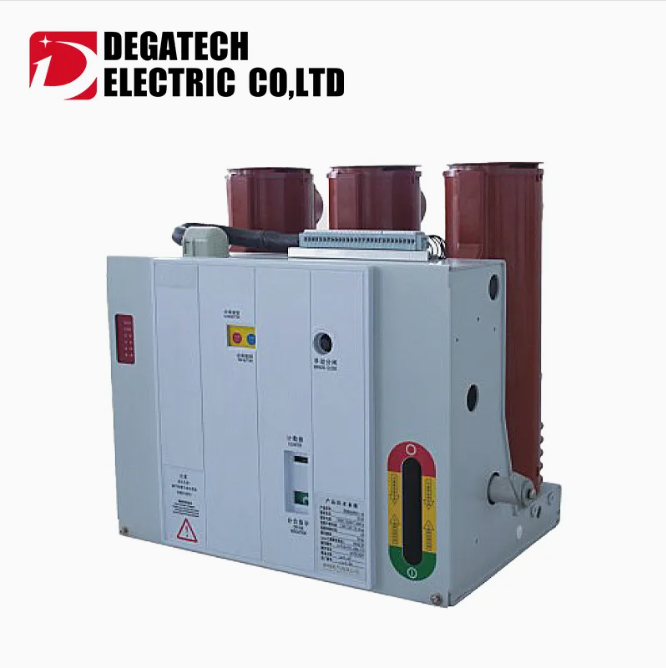
Why Degatech Vacuum Circuit Breakers Stand Out
Degatech Electric Co., Ltd. focuses on delivering eco-friendly, high-performance VCB solutions. Advantages include:
Vacuum Interruption Technology: No SF₆, environmentally responsible
Long Mechanical Life: >30,000 switching cycles
Flexible Installation Options: Fixed, withdrawable, or compact modular designs
Enhanced Environmental Resistance: Suitable for humid or coastal regions
Compliance: Meets IEC/GB international standards for medium-voltage equipment
Degatech VCBs are engineered for modern smart grids, renewable energy integration, and industrial automation applications, ensuring reliability, sustainability, and low total cost of ownership.
Selection Guidelines for Vacuum Circuit Breakers
Assess System Requirements: Rated voltage, current, fault capacity
Choose Mechanism Type: Spring (N) for frequent operations, fixed (G) for low maintenance
Select Installation Type: Indoor (Z) vs. Outdoor (W) based on environmental conditions
Check Series & Generation: Updated series (A, B, 2) indicate improved performance
Plan Maintenance & Lifecycle: Withdrawable (S) for easy service and replacement
A properly selected VCB ensures operational reliability, safety, and compatibility with network design.
Future Trends in Vacuum Circuit Breaker Technology
Digital Monitoring & IoT Integration: Real-time performance data
Eco-Friendly Materials: Zero greenhouse gas emissions
Higher Endurance Contacts: Improved life cycle for frequent switching
Compact Switchgear Design: Optimized for urban substations and renewable energy applications
Understanding letter codes will remain critical for engineers as these technologies evolve, ensuring accurate selection and long-term operational efficiency.
Frequently Asked Questions
Q1: What does the letter “Z” mean in a VCB model?
It indicates indoor installation, typically in metal-clad switchgear panels.
Q2: Are all Vacuum Circuit Breakers eco-friendly?
Not necessarily. Eco-friendly VCBs use vacuum interruption to avoid SF₆ gas emissions.
Q3: What is the advantage of withdrawable VCBs (S)?
They allow quick maintenance, replacement, and reduce downtime in critical distribution systems.
Q4: Can indoor VCBs be used outdoors?
No, outdoor conditions require W-type enclosures for weather and corrosion protection.
Q5: How do I select a VCB for renewable energy systems?
Look for eco-friendly vacuum types, updated series (A/B), and mechanism types that support frequent switching and smart grid integration.
Q6: Does series number affect performance?
Yes, higher series numbers often indicate improvements in mechanical endurance, insulation, and overall reliability.

Wind Substation Equipment: Types, Functions, and Selection Guide
Wind substation equipment plays a critical role in collecting, transforming, protecting, and transmitting electricity generated by wind turbines. From medium-voltage (MV) switchgear and power transformers to high-voltage (HV) equipment, protection [...]

Solar Farm Switchgear: Selection, Design, and Application Guide
Solar farm switchgear is an essential part of the electrical infrastructure used to collect, control, protect, and distribute power generated by photovoltaic (PV) systems. From inverter output circuits and transformer [...]

Future-Proof Switchgear: Design, Selection, and Long-Term Reliability
Future-proof switchgear is designed and selected to accommodate changing electrical loads, evolving technologies, operational requirements, and future expansion with minimal disruption. For industrial facilities, commercial buildings, utilities, renewable energy projects, [...]