

Vacuum Circuit Breaker: 9 Essential Advantages and Complete Guide for Reliable Power Protection
The following is the table of contents for this article.
Thanks for sharing the article.
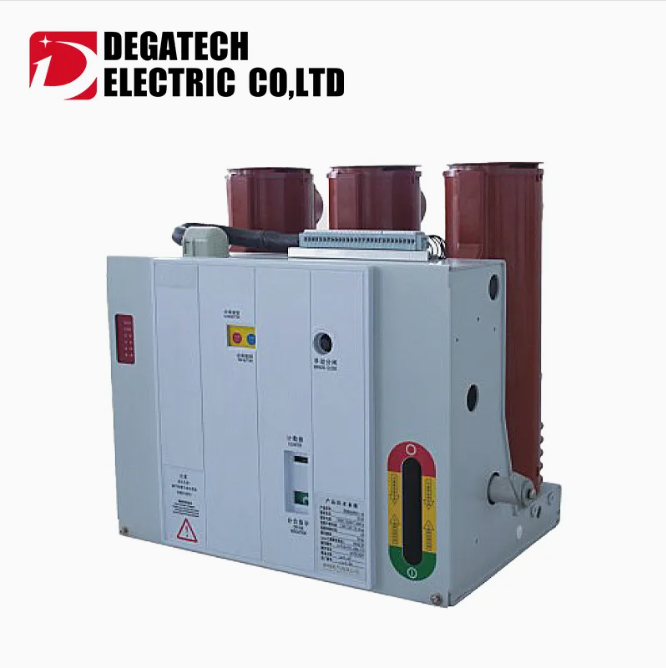
A vacuum circuit breaker (VCB) is a highly reliable electrical switching device used in medium-voltage power systems to protect equipment from faults such as short circuits and overloads. Unlike traditional circuit breakers that rely on oil or gas for arc quenching, vacuum circuit breakers use a vacuum as the arc extinction medium, making them efficient, safe, and environmentally friendly.
These breakers are widely used in electrical substations, industrial plants, and distribution networks. Their design and performance are guided by international electrical standards developed by organizations such as International Electrotechnical Commission and Institute of Electrical and Electronics Engineers.
In this article, we will explore vacuum circuit breakers in detail, including their structure, working principle, advantages, types, and applications.

What is a Vacuum Circuit Breaker?
A vacuum circuit breaker is an electrical device designed to interrupt current flow during abnormal conditions such as short circuits or overloads. It uses vacuum interrupters where electrical arcs are extinguished in a high vacuum environment.
Vacuum circuit breakers are commonly used in medium-voltage systems ranging from 1 kV to 36 kV.
Main Functions
- Interrupt fault currents
- Protect electrical equipment
- Isolate faulty circuits
- Ensure safe maintenance operations
- Maintain stable power distribution
Because of their reliability and minimal maintenance requirements, vacuum circuit breakers have become a preferred solution in modern power systems.
How Vacuum Circuit Breakers Work
The operation of a vacuum circuit breaker is based on the principle of arc extinction in a vacuum.
Step-by-Step Operation
- Normal Operation
During normal conditions, the breaker contacts remain closed, allowing electrical current to flow. - Fault Detection
When a fault occurs, protection relays detect abnormal current levels. - Breaker Operation
The circuit breaker mechanism separates the contacts. - Arc Formation
When contacts separate, an electrical arc forms between them. - Arc Extinction
In a vacuum environment, there are no gases to sustain the arc, so the arc quickly extinguishes. - Current Interruption
The circuit is safely disconnected, protecting the electrical system.
This rapid arc extinction makes vacuum circuit breakers highly efficient and reliable.
Main Components of a Vacuum Circuit Breaker
Vacuum circuit breakers consist of several important components that enable safe switching operations.
Vacuum Interrupter
The vacuum interrupter is the core component of the breaker. It contains sealed contacts inside a vacuum chamber where arc interruption occurs.
Fixed and Moving Contacts
These contacts open and close to control electrical flow.
Operating Mechanism
The operating mechanism controls the opening and closing of the breaker contacts.
Insulating Enclosure
Insulation protects the breaker components and ensures safe electrical isolation.
Control System
Modern breakers include electronic control systems for monitoring and remote operation.
Types of Vacuum Circuit Breakers
Vacuum circuit breakers can be classified based on their design and application.
Indoor Vacuum Circuit Breakers
Indoor VCBs are installed inside electrical panels or switchgear rooms.
Common applications include:
- Industrial power systems
- Commercial buildings
- Electrical substations
Outdoor Vacuum Circuit Breakers
Outdoor VCBs are designed to operate in external environments and withstand weather conditions.
They are commonly used in:
- Power distribution networks
- Utility substations
- Renewable energy facilities
Advantages of Vacuum Circuit Breakers
Vacuum circuit breakers offer several significant advantages compared to other breaker technologies.
High Reliability
Vacuum provides excellent insulation and arc quenching capabilities.
Low Maintenance
VCBs require minimal maintenance compared to oil circuit breakers.
Long Service Life
Vacuum interrupters can perform thousands of switching operations without significant wear.
Compact Design
VCBs are smaller and lighter than many traditional breakers.
Environmentally Friendly
They do not use oil or harmful gases.
Fast Arc Extinction
The arc is extinguished almost immediately due to the vacuum environment.
Applications of Vacuum Circuit Breakers
Vacuum circuit breakers are widely used in many industries and infrastructure systems.
Power Distribution Networks
Utilities use VCBs to protect medium-voltage distribution systems.
Industrial Facilities
Factories and manufacturing plants rely on VCBs to protect electrical equipment.
Renewable Energy Systems
Wind farms and solar power plants use VCBs to ensure stable power distribution.
Commercial Buildings
Large commercial complexes and data centers use VCBs for reliable power protection.
Transportation Systems
Railways and metro networks use VCBs in traction power systems.
Installation Considerations
Proper installation is essential for safe and reliable breaker performance.
Key considerations include:
- Correct voltage rating selection
- Proper grounding and insulation
- Adequate ventilation and cooling
- Compliance with electrical safety standards
- Appropriate protection coordination
Maintenance of Vacuum Circuit Breakers
Although VCBs require minimal maintenance, periodic inspection is recommended.
Typical maintenance tasks include:
- Checking contact wear
- Inspecting insulation condition
- Testing operating mechanisms
- Verifying protection relay coordination
- Performing electrical testing
Routine maintenance ensures optimal performance and extends equipment life.
Future Trends in Vacuum Circuit Breaker Technology
Advancements in electrical engineering are improving vacuum circuit breaker performance.
Smart Monitoring Systems
Modern breakers include sensors for real-time condition monitoring.
Digital Protection Integration
Advanced protection systems allow faster fault detection.
Compact Modular Designs
New breaker designs focus on space-saving and modular installation.
Smart Grid Compatibility
VCBs are increasingly integrated into intelligent grid systems for improved reliability.

Frequently Asked Questions (FAQs)
1. What voltage levels are vacuum circuit breakers used for?
Vacuum circuit breakers are typically used for medium-voltage systems ranging from 1 kV to 36 kV.
2. Why is vacuum used in circuit breakers?
Vacuum provides excellent arc quenching properties, allowing fast and efficient interruption of electrical current.
3. What are the advantages of vacuum circuit breakers over oil circuit breakers?
VCBs offer:
- Lower maintenance
- Longer service life
- Better safety
- No oil leakage risk
4. Where are vacuum circuit breakers commonly installed?
They are commonly installed in substations, industrial plants, power distribution networks, and commercial buildings.
5. How long does a vacuum circuit breaker last?
With proper maintenance, a vacuum circuit breaker can last 20–30 years or more.
6. Are vacuum circuit breakers environmentally friendly?
Yes. Since they do not use oil or harmful gases, vacuum circuit breakers are considered environmentally safer.
Conclusion
Vacuum circuit breakers are an essential part of modern electrical power systems. Their high reliability, minimal maintenance requirements, and environmentally friendly design make them a preferred choice for medium-voltage protection. As power networks continue to evolve with smart grid technologies and renewable energy integration, vacuum circuit breakers will remain a key component in ensuring safe and efficient electrical distribution.

Wind Substation Equipment: Types, Functions, and Selection Guide
Wind substation equipment plays a critical role in collecting, transforming, protecting, and transmitting electricity generated by wind turbines. From medium-voltage (MV) switchgear and power transformers to high-voltage (HV) equipment, protection [...]

Solar Farm Switchgear: Selection, Design, and Application Guide
Solar farm switchgear is an essential part of the electrical infrastructure used to collect, control, protect, and distribute power generated by photovoltaic (PV) systems. From inverter output circuits and transformer [...]

Future-Proof Switchgear: Design, Selection, and Long-Term Reliability
Future-proof switchgear is designed and selected to accommodate changing electrical loads, evolving technologies, operational requirements, and future expansion with minimal disruption. For industrial facilities, commercial buildings, utilities, renewable energy projects, [...]