

Switchgear for Factory: Selection, Design & Application Guide
The following is the table of contents for this article.
Thanks for sharing the article.
Switchgear for factory applications is a critical part of the electrical distribution system. It controls, protects, isolates, and distributes electrical power between the incoming supply, transformers, production equipment, motors, auxiliary systems, and other factory loads.
Unlike a simple commercial building, a factory may have large motors, production machinery, transformers, welding equipment, variable-frequency drives, compressors, pumps, HVAC systems, and other loads with demanding electrical characteristics. The switchgear therefore needs to be selected as part of the complete power distribution system.
The right factory switchgear depends on factors such as system voltage, continuous current, short-circuit level, load characteristics, installation environment, protection requirements, maintenance strategy, and future expansion.
This guide explains how to select and engineer switchgear for factory applications, with particular attention to MV and LV distribution systems.
What Is Switchgear for a Factory?
Switchgear for a factory is a group of electrical switching and protection equipment used to manage power distribution within an industrial facility.
Depending on the factory’s electrical architecture, switchgear can be installed at several points:
Utility Supply → MV Switchgear → Transformer → LV Switchgear → Distribution Boards → Production Loads
A larger facility may have multiple transformers, MV switchgear lineups, LV main switchboards, motor control centers, emergency supplies, generators, and interconnected distribution systems.
Typical switchgear components include:
- Circuit breakers
- Load switches
- Disconnectors
- Earthing switches
- Busbars
- Current transformers
- Voltage transformers or voltage sensors
- Protection relays
- Metering equipment
- Control and communication devices
The exact configuration depends on the electrical system and project requirements.
Why Do Factories Need Proper Switchgear?
Factory electrical systems can experience significant and variable loads.
Production machinery may start and stop frequently, large motors can produce high starting currents, and process equipment may introduce harmonics or other power-quality considerations.
Properly engineered switchgear helps provide:
Electrical protection
Circuit breakers and protective relays can detect and interrupt faults within their rated capabilities.
Operational control
Switchgear allows electrical circuits to be switched, isolated, and controlled.
Equipment isolation
Disconnectors and earthing arrangements can support safe maintenance procedures when correctly designed and operated.
Distribution management
Switchgear divides the electrical network into manageable sections.
System monitoring
Meters, sensors, and digital protection devices can provide information about system operating conditions.
Future flexibility
A suitable configuration can provide space or capacity for planned factory expansion where required.
Factory Power Distribution Architecture
A typical industrial distribution system can contain several voltage levels.
A simplified architecture is:
Utility/Grid → Incoming MV Switchgear → Transformer → Main LV Switchboard → MCC/Distribution Boards → Factory Loads
Large factories may instead use multiple transformers and distribution sections.
For example:
- MV incoming switchgear
- MV feeder switchgear
- Transformer
- LV main switchboard
- Motor control center
- Production distribution panels
- Auxiliary distribution boards
Critical facilities may also include:
- Generators
- Automatic transfer systems
- UPS systems
- Emergency distribution
- Redundant feeders
- Alternative power sources
The distribution topology should be established from the factory’s load profile, reliability requirements, utility conditions, and operating philosophy.
MV vs LV Switchgear for Factory Applications
Both MV and LV switchgear can have important roles in industrial facilities.
MV Switchgear
Medium-voltage switchgear is often used for:
- Utility incoming supplies
- Transformer primary connections
- Large industrial distribution systems
- Large motors
- Plant substations
- Internal MV distribution
Vacuum circuit breakers are commonly used in many MV applications.
MV switchgear selection can involve:
- Rated voltage
- Rated current
- Short-circuit rating
- Insulation level
- Circuit-breaker technology
- Protection scheme
- CT/VT or sensor requirements
- Cable termination
- Indoor or outdoor installation
- Maintenance requirements
For further information, see the switchgear products page.
LV Switchgear
LV switchgear is generally used downstream of transformers to distribute power to:
- Motors
- Lighting
- HVAC
- Process machinery
- Pumps
- Compressors
- Control systems
- General factory services
LV assemblies may incorporate air circuit breakers, molded-case circuit breakers, contactors, motor protection devices, and other protective equipment.
The exact boundary between voltage categories should follow applicable standards and local requirements.
Common Types of Switchgear for Factories
Factories can use different switchgear technologies depending on voltage level, layout, operating requirements, and environmental conditions.
1. Air-Insulated Switchgear
Air-insulated switchgear uses air as the primary insulating medium around energized components.
It can be suitable for many indoor and outdoor applications, depending on its design and environmental rating.
2. Gas-Insulated Switchgear
Gas-insulated designs can provide a compact arrangement and may be useful where installation space is constrained.
The specific insulating medium and environmental requirements should be evaluated during equipment selection.
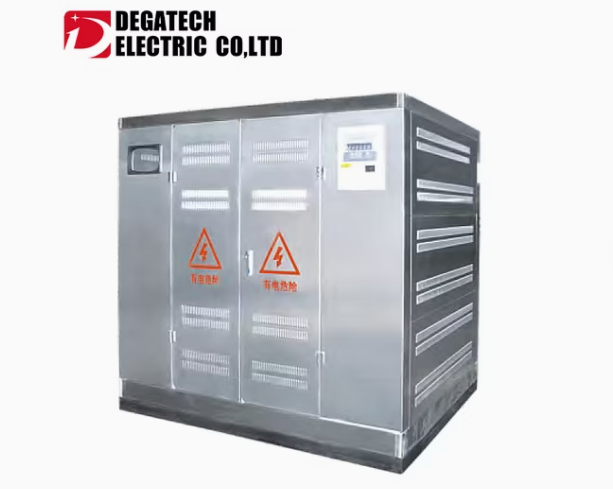
3. Solid-Insulated Switchgear
Solid-insulated designs use solid dielectric materials for insulation.
They can be considered for applications where compact construction, insulation design, or environmental considerations are important.
See the related guide to solid insulation type switchgear.
4. Fixed Switchgear
Fixed equipment keeps the circuit-breaker or switching device in a fixed operating position.
This can provide a straightforward arrangement, although maintenance and isolation procedures need to be considered during system design.
5. Withdrawable Switchgear
Withdrawable switchgear allows applicable equipment, such as a circuit breaker, to move between defined positions.
Potential benefits can include operational flexibility and maintenance arrangements, but the switchgear room must accommodate the required withdrawal path and equipment clearances.
See the guide to withdrawable chassis for vacuum circuit breakers.
How to Select Switchgear for a Factory
Selecting factory switchgear starts with the electrical system rather than the equipment catalog.
Several technical parameters should be established.
1. System Voltage
Determine the nominal system voltage and the applicable equipment rated voltage.
Factory systems can contain multiple voltage levels, so each switchgear lineup needs to be evaluated according to its location in the distribution network.
2. Continuous Current
The switchgear rated current should accommodate the expected continuous load under the applicable installation conditions.
The calculation should consider:
- Maximum demand
- Transformer capacity
- Load diversity
- Future expansion
- Ambient conditions
- Busbar configuration
- Feeder loading
3. Short-Circuit Current
The prospective short-circuit current is a key factor in switchgear selection.
A short-circuit study should be performed to determine fault levels at relevant points in the factory electrical network.
The resulting values help determine:
- Circuit-breaker interrupting capability
- Short-time withstand requirements
- Peak withstand requirements
- Busbar requirements
- Protection settings
A breaker should not be selected based solely on its continuous current rating.
4. Installation Environment
The installation location can affect equipment selection.
Consider:
- Temperature
- Humidity
- Dust
- Pollution
- Altitude
- Corrosive chemicals
- Water exposure
- Indoor or outdoor installation
- Ventilation
- Available space
Manufacturers’ environmental and installation requirements should be checked against actual factory conditions.
Circuit Breaker Selection for Factory Switchgear
Circuit breakers are fundamental components of factory switchgear.
Depending on voltage level and application, factories may use different breaker technologies.
Vacuum Circuit Breakers
Vacuum circuit breakers are commonly used in medium-voltage applications.
They can be used for:
- Incoming feeders
- Transformer feeders
- Motor feeders
- Distribution feeders
- Bus-section applications
For engineers working with VCB specifications, understanding the manufacturer’s model and designation system is important. See this vacuum circuit breaker letter designation guide.
Air Circuit Breakers
Air circuit breakers are commonly used in many LV main switchboards and high-current applications.
Their selection involves parameters such as:
- Rated current
- Interrupting capability
- Short-time withstand
- Protection functions
- Trip-unit characteristics
- Coordination requirements
The breaker should be selected together with the overall protection system.
Protection for Factory Switchgear
Protection is particularly important in industrial distribution because a fault can interrupt production and potentially damage electrical equipment.
Protection schemes may include:
- Overcurrent protection
- Short-circuit protection
- Earth-fault protection
- Undervoltage protection
- Overvoltage protection
- Differential protection
- Transformer protection
- Motor protection
Protection coordination studies should consider the relationship between upstream and downstream protective devices.
The objective is to achieve appropriate fault clearing while minimizing unnecessary interruption to healthy sections of the factory network.
Protection settings should be based on the actual electrical system, equipment ratings, calculated fault levels, load characteristics, and applicable protection philosophy.
Factory Switchgear Layout and Installation
Switchgear layout should be considered during the early design stage.
A factory electrical room may need to accommodate:
- Switchgear lineup
- Cable trenches
- Cable entry points
- Transformer connections
- Bus ducts
- Control panels
- Protection equipment
- Maintenance access
- Equipment withdrawal space
- Ventilation
- Fire protection systems
Maintenance Access
Operators and maintenance personnel need appropriate access to equipment.
For withdrawable switchgear, the room must provide sufficient space for the equipment’s intended movement and maintenance procedures.
Cable Routing
Cable bending radius, termination space, cable segregation, and routing should be coordinated with the switchgear design.
Heat Management
Electrical losses produce heat. Ventilation and thermal considerations should therefore be evaluated according to equipment loading and installation conditions.
Switchgear for Heavy Industrial Factories
Some factories have particularly demanding electrical loads.
Examples can include facilities with:
- Large motors
- Compressors
- Pumps
- Furnaces
- Welding systems
- Crushers
- Conveyors
- Production lines
- Large HVAC systems
- Variable-frequency drives
These loads can influence the electrical distribution design.
Large motors may require consideration of starting current and voltage effects.
Power-electronic equipment may introduce harmonics or other power-quality considerations.
The switchgear and upstream system should therefore be designed based on actual load characteristics rather than assuming all factory loads behave like simple resistive loads.
Digital Switchgear and Factory Automation
Modern factories may integrate electrical distribution equipment with monitoring and automation systems.
Digital switchgear can incorporate:
- Digital protection relays
- Power meters
- Sensors
- Event recording
- Remote monitoring
- Communication interfaces
- SCADA integration
Potential applications include:
- Real-time electrical measurements
- Fault-event recording
- Remote status monitoring
- Energy management
- Equipment diagnostics
- Operational data collection
However, digital monitoring does not eliminate the need for physical inspection, testing, or maintenance.
If switchgear is connected to factory networks or remote-control systems, cybersecurity should also be considered.
Factory Switchgear and Safety
Electrical safety should be incorporated into switchgear design, installation, operation, and maintenance.
Important considerations can include:
Isolation
Equipment should provide appropriate means of isolating circuits for maintenance.
Earthing
Earthing arrangements should provide appropriate fault-current paths and support protection-system operation.
Interlocking
Mechanical and electrical interlocks can help prevent inappropriate switching sequences where required by the equipment and system design.
Protection Against Energized Parts
The equipment enclosure and internal construction should provide the required level of protection against accidental contact with energized components.
Maintenance Procedures
Operating and maintenance procedures should correspond to the actual switchgear design.
Arc-flash risk assessment may also be required depending on the project, jurisdiction, and applicable safety requirements.
Standards for Factory Switchgear
The applicable standard depends on the voltage level, equipment type, installation, and project requirements.
The IEC 62271 series is relevant to many high-voltage switchgear and controlgear applications.
For many low-voltage switchgear and controlgear assemblies, the IEC 61439 series is relevant.
Other standards may apply to:
- Circuit breakers
- Transformers
- Cables
- Protection relays
- Metering
- Earthing
- Electrical installations
- Communication systems
Always confirm the standards specified by the factory project, local regulations, utility, and equipment manufacturer.
The International Electrotechnical Commission provides information on IEC standards.
Factory Switchgear Testing and Commissioning
Switchgear should be verified before being placed into service.
Factory acceptance testing may include applicable inspections and tests defined by the relevant standards, manufacturer documentation, and project specifications.
Site commissioning can include:
- Visual inspection
- Mechanical operation checks
- Wiring verification
- Insulation testing
- Circuit-breaker testing
- Protection relay testing
- Interlock verification
- Metering checks
- Communication testing
- Functional testing
- Control-system verification
The exact test scope should be established from the equipment type, standards, manufacturer’s requirements, and approved commissioning procedures.
Maintenance of Factory Switchgear
A factory switchgear maintenance program should be based on the equipment manufacturer’s instructions, operating conditions, applicable standards, and the facility’s maintenance strategy.
Possible activities include:
- Visual inspection
- Cleaning where appropriate
- Mechanical inspection
- Connection checks
- Circuit-breaker testing
- Protection relay testing
- Insulation checks
- Thermal inspection where appropriate
- Verification of control circuits
- Inspection of cable terminations
- Review of event records
The required maintenance frequency varies according to equipment design and operating conditions.

Common Mistakes When Selecting Factory Switchgear
Choosing Equipment Only by Current Rating
Current rating is important, but it does not establish whether the equipment can withstand or interrupt the expected fault current.
Ignoring the Factory Load Profile
Motors, drives, welding equipment, furnaces, and other industrial loads can have characteristics that affect system design.
Underestimating Future Expansion
A factory may add production lines or larger equipment. Expansion requirements should be considered before finalizing the distribution architecture.
Poor Protection Coordination
Incorrect protection settings can cause unnecessary shutdowns or inadequate fault protection.
Insufficient Electrical Room Space
Switchgear rooms must accommodate equipment, cables, maintenance activities, and any required withdrawal or access paths.
Ignoring Environmental Conditions
Dust, humidity, temperature, corrosive substances, and other factory conditions can affect equipment suitability.
Treating Switchgear as a Standalone Product
Factory switchgear should be coordinated with transformers, cables, protection, grounding, control systems, and the overall power distribution architecture.
Factory Switchgear Selection Checklist
Before ordering switchgear for a factory, review:
System voltage confirmed
Rated voltage verified
Maximum demand calculated
Continuous current established
Short-circuit study completed
Protection coordination completed
Transformer requirements confirmed
Cable requirements confirmed
Busbar rating confirmed
Indoor/outdoor environment assessed
Temperature and humidity considered
Dust and pollution conditions assessed
Cable entry and termination arrangement confirmed
Electrical-room dimensions checked
Maintenance access confirmed
Withdrawal space confirmed where applicable
Interlocking requirements defined
Metering requirements defined
Communication requirements defined
Applicable standards identified
FAT requirements established
Commissioning requirements established
Future expansion considered
FAQs About Switchgear for Factory
What is switchgear used for in a factory?
Factory switchgear is used to distribute, control, protect, and isolate electrical circuits. It can be installed at incoming supplies, transformer connections, main distribution points, and feeders supplying production equipment.
What type of switchgear is used in factories?
Factories can use MV and LV switchgear, including air-insulated, gas-insulated, solid-insulated, fixed, and withdrawable configurations. The appropriate type depends on voltage, current, fault level, environment, layout, and operating requirements.
Is MV switchgear necessary for a factory?
Not every factory requires MV switchgear. The requirement depends on the incoming utility supply, facility size, transformer arrangement, and distribution architecture.
What is the difference between MV and LV factory switchgear?
MV switchgear is used at medium-voltage portions of the distribution system, such as utility incomers and transformer primary circuits. LV switchgear is generally used downstream of transformers for lower-voltage distribution to factory loads.
Why are vacuum circuit breakers used in factory switchgear?
Vacuum circuit breakers are commonly used in many MV applications because vacuum interruption technology is suitable for switching and interrupting fault currents within the applicable equipment ratings.
How do I select switchgear for a factory?
Start with the system voltage, load current, short-circuit level, load characteristics, protection requirements, environmental conditions, installation layout, applicable standards, maintenance requirements, and future expansion plans.
What short-circuit rating should factory switchgear have?
The required rating should be established from the calculated prospective fault current at the switchgear installation point, together with the applicable withstand and interrupting requirements.
Can factory switchgear be installed outdoors?
Yes, equipment designed and rated for outdoor installation can be used where appropriate. Site temperature, humidity, rain, dust, pollution, corrosion, solar radiation, altitude, and other environmental conditions must be evaluated.
What protection is required for factory switchgear?
Protection depends on the electrical architecture and equipment. Common functions include overcurrent, short-circuit, earth-fault, transformer, motor, undervoltage, and other protection functions as required.
Does factory switchgear require regular maintenance?
Yes. Maintenance requirements depend on equipment design, manufacturer instructions, operating conditions, applicable standards, and the facility’s maintenance strategy.
What standards apply to factory switchgear?
The applicable standards depend on the equipment and voltage level. IEC 62271 is relevant to many MV/HV switchgear and controlgear applications, while IEC 61439 is relevant to many LV switchgear and controlgear assemblies.
Should factory switchgear allow future expansion?
Where future expansion is expected, the design can consider spare capacity, additional feeder positions, physical space, cable routes, transformer capacity, and modification requirements.
What is digital factory switchgear?
Digital switchgear combines conventional electrical switching and protection equipment with digital measurement, monitoring, communication, and control functions. It can provide greater visibility into electrical system conditions but does not eliminate conventional maintenance and safety requirements.
Conclusion
Choosing switchgear for factory applications requires a system-level approach.
The correct equipment depends on the factory’s voltage levels, load profile, short-circuit conditions, protection philosophy, environmental conditions, physical layout, operating requirements, and future expansion plans.
MV switchgear may be required for incoming utility supplies, transformer primary circuits, and industrial distribution, while LV switchgear commonly distributes power to production machinery and auxiliary systems.
Beyond the basic equipment rating, engineers should evaluate protection coordination, circuit-breaker technology, cable interfaces, grounding, interlocking, maintenance access, environmental conditions, digital monitoring, testing, and commissioning.
The most effective factory switchgear design is therefore not simply the equipment with the highest rating or most features. It is the configuration that is properly matched to the electrical system and the factory’s actual operating requirements.

Wind Substation Equipment: Types, Functions, and Selection Guide
Wind substation equipment plays a critical role in collecting, transforming, protecting, and transmitting electricity generated by wind turbines. From medium-voltage (MV) switchgear and power transformers to high-voltage (HV) equipment, protection [...]

Solar Farm Switchgear: Selection, Design, and Application Guide
Solar farm switchgear is an essential part of the electrical infrastructure used to collect, control, protect, and distribute power generated by photovoltaic (PV) systems. From inverter output circuits and transformer [...]

Future-Proof Switchgear: Design, Selection, and Long-Term Reliability
Future-proof switchgear is designed and selected to accommodate changing electrical loads, evolving technologies, operational requirements, and future expansion with minimal disruption. For industrial facilities, commercial buildings, utilities, renewable energy projects, [...]