
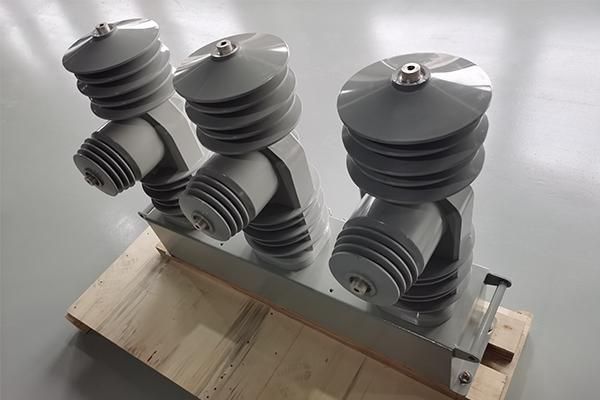
Switchgear Epoxy Bushing: Essential Insulation for Modern Power Distribution
The following is the table of contents for this article.
Thanks for sharing the article.
Introduction
A switchgear epoxy bushing is a critical insulation component used in medium-voltage and high-voltage switchgear systems. Designed to provide electrical insulation while allowing conductors to pass safely through grounded metal enclosures, epoxy bushings play a key role in ensuring the reliability, safety, and efficiency of power distribution equipment.
As utilities, industrial facilities, and renewable energy projects demand more compact and maintenance-free electrical equipment, epoxy resin insulation technology has become increasingly popular. Compared with traditional porcelain insulation, epoxy bushings offer superior mechanical strength, excellent dielectric performance, and greater design flexibility.
Today, the switchgear epoxy bushing is widely used in switchgear panels, vacuum circuit breakers, ring main units (RMUs), and other medium-voltage electrical applications.
What Is a Switchgear Epoxy Bushing?
A switchgear epoxy bushing is an insulating component manufactured from epoxy resin and designed to electrically isolate live conductors from grounded switchgear structures.
Its primary functions include:
- Electrical insulation
- Conductor support
- Mechanical protection
- Arc resistance
- Safe power transmission
Epoxy bushings are commonly installed where conductors pass through metal partitions, switchgear cabinets, or insulation barriers.
How a Switchgear Epoxy Bushing Works
The bushing creates a secure insulated path between energized conductors and grounded equipment structures.
Electrical Isolation
The epoxy material prevents current leakage and flashover.
Mechanical Support
The bushing securely holds conductors in position.
Environmental Protection
It protects electrical components from dust, moisture, and contamination.
System Reliability
Proper insulation helps prevent faults and equipment failures.
This combination of electrical and mechanical performance makes epoxy bushings essential for modern switchgear systems.

Switchgear epoxy bushing for medium voltage insulation
Key Features of Switchgear Epoxy Bushings
High Dielectric Strength
Provides reliable insulation under medium-voltage operating conditions.
Excellent Mechanical Strength
Withstands vibration, impact, and operational stress.
Compact Design
Supports modern compact switchgear configurations.
Moisture Resistance
Performs reliably in humid environments.
Long Service Life
Maintains stable insulation properties for many years.
Low Maintenance Requirements
Requires minimal inspection and maintenance after installation.
Types of Switchgear Epoxy Bushings
Indoor Epoxy Bushings
Designed for indoor switchgear installations.
Applications include:
Outdoor Epoxy Bushings
Manufactured for harsh environmental conditions.
Embedded Pole Bushings
Integrated with vacuum interrupter assemblies.
Busbar Support Bushings
Provide insulation and mechanical support for switchgear busbars.
Customized Epoxy Bushings
Designed according to specific switchgear requirements.
Applications of Switchgear Epoxy Bushings
Medium Voltage Switchgear
One of the most common applications.
Vacuum Circuit Breakers (VCBs)
Used as insulation components for conductor connections and interrupter assemblies.
Ring Main Units (RMUs)
Support safe operation in compact distribution equipment.
Solid Insulated Switchgear (SIS)
Play a critical role in SF6-free switchgear designs.
Gas Insulated Switchgear (GIS)
Used for conductor insulation and structural support.
Power Distribution Substations
Ensure reliable insulation throughout electrical systems.
Advantages of Epoxy Bushings in Switchgear
Improved Electrical Performance
High insulation capability reduces the risk of electrical faults.
Enhanced Safety
Protects personnel and equipment from accidental contact and flashover.
Space-Saving Design
Allows manufacturers to develop more compact switchgear systems.
Durability
Resistant to environmental stress and aging.
Cost-Effective Operation
Long service life reduces replacement and maintenance costs.
Switchgear Epoxy Bushing vs Porcelain Bushing
| Feature | Switchgear Epoxy Bushing | Porcelain Bushing |
|---|---|---|
| Weight | Lightweight | Heavy |
| Mechanical Strength | High | Moderate |
| Impact Resistance | Excellent | Lower |
| Design Flexibility | High | Limited |
| Maintenance | Low | Moderate |
| Installation | Easier | More Complex |
Modern switchgear manufacturers increasingly prefer epoxy bushings due to their superior performance and manufacturing flexibility.
Key Technical Specifications
When selecting a switchgear epoxy bushing, important parameters include:
Rated Voltage
Common ratings include:
- 12kV
- 24kV
- 36kV
- 40.5kV
Insulation Level
Determines dielectric performance under operating conditions.
Mechanical Strength
Ensures long-term reliability under operational loads.
Partial Discharge Performance
Low partial discharge levels indicate high insulation quality.
Environmental Resistance
Important for installations in challenging conditions.

Switchgear epoxy bushing for medium voltage insulation
How to Choose the Right Switchgear Epoxy Bushing
Match Voltage Requirements
Choose a bushing suitable for the system voltage.
Verify Quality Standards
Look for compliance with IEC standards.
Evaluate Material Quality
High-grade epoxy resin improves durability and insulation performance.
Consider Equipment Compatibility
Ensure compatibility with switchgear and circuit breaker designs.
Review Manufacturer Experience
Experienced suppliers often provide higher quality and better technical support.
Future Trends in Switchgear Epoxy Bushing Technology
Advanced Epoxy Materials
New formulations improve thermal and dielectric performance.
Compact Switchgear Development
Smaller equipment designs increase demand for optimized bushings.
SF6-Free Switchgear Growth
Epoxy bushings play an important role in environmentally friendly switchgear solutions.
Smart Manufacturing
Automated production improves consistency and product quality.
Enhanced Partial Discharge Resistance
Continuous improvements help extend insulation life.
FAQs
What is a switchgear epoxy bushing?
A switchgear epoxy bushing is an insulating component that allows conductors to pass through switchgear structures while maintaining electrical isolation.
Why is epoxy resin used for switchgear bushings?
Because it provides excellent dielectric strength, mechanical durability, and environmental resistance.
Where are switchgear epoxy bushings used?
They are commonly used in medium-voltage switchgear, vacuum circuit breakers, RMUs, and substations.
What are the advantages of epoxy bushings?
Benefits include high insulation performance, long service life, compact design, and low maintenance.
How do I choose the right switchgear epoxy bushing?
Consider voltage rating, insulation performance, mechanical strength, and equipment compatibility.
Are epoxy bushings suitable for medium-voltage applications?
Yes. They are widely used in systems ranging from 12kV to 40.5kV and higher.
Conclusion
A switchgear epoxy bushing is an essential component that contributes to the safety, reliability, and performance of modern electrical distribution systems. Its superior insulation properties, mechanical strength, and long-term durability make it the preferred choice for medium-voltage switchgear, vacuum circuit breakers, and advanced power infrastructure.
As electrical networks continue to adopt compact and environmentally friendly technologies, switchgear epoxy bushings will remain a key element in the future of power distribution.

Wind Substation Equipment: Types, Functions, and Selection Guide
Wind substation equipment plays a critical role in collecting, transforming, protecting, and transmitting electricity generated by wind turbines. From medium-voltage (MV) switchgear and power transformers to high-voltage (HV) equipment, protection [...]

Solar Farm Switchgear: Selection, Design, and Application Guide
Solar farm switchgear is an essential part of the electrical infrastructure used to collect, control, protect, and distribute power generated by photovoltaic (PV) systems. From inverter output circuits and transformer [...]

Future-Proof Switchgear: Design, Selection, and Long-Term Reliability
Future-proof switchgear is designed and selected to accommodate changing electrical loads, evolving technologies, operational requirements, and future expansion with minimal disruption. For industrial facilities, commercial buildings, utilities, renewable energy projects, [...]