
Solid Insulated Switchgear: A Sustainable Solution for Modern Electrical Networks
The following is the table of contents for this article.
Thanks for sharing the article.
Introduction
Solid insulated switchgear is an innovative medium-voltage power distribution solution that uses solid dielectric materials instead of traditional SF6 gas or air insulation. Designed to improve safety, reliability, and environmental sustainability, solid insulated switchgear has become an increasingly popular choice for utilities, industrial facilities, renewable energy projects, and smart grid applications.
As environmental regulations tighten and the demand for SF6-free equipment grows, solid insulated switchgear offers a practical alternative that combines compact design, excellent insulation performance, and low maintenance requirements. By utilizing advanced epoxy resin insulation and vacuum interruption technology, these systems deliver reliable operation while reducing environmental impact.
Today, solid insulated switchgear is widely recognized as one of the most promising technologies for the future of medium-voltage power distribution.
What Is Solid Insulated Switchgear?
Solid insulated switchgear (SIS) is a type of medium-voltage switchgear that uses solid insulating materials to isolate live electrical components and maintain dielectric strength.
Unlike conventional gas-insulated switchgear, SIS eliminates the need for SF6 gas and relies on:
- Epoxy resin insulation
- Embedded pole technology
- Vacuum interrupters
- Sealed insulation systems
This design provides a safe, compact, and environmentally friendly solution for power distribution networks.
How Solid Insulated Switchgear Works
The operating principle combines solid insulation and vacuum switching technology.
Power Distribution
Electrical energy flows through insulated conductors and busbars.
Continuous Monitoring
Protection relays monitor current and voltage conditions.
Fault Detection
Abnormal conditions are identified by the protection system.
Vacuum Interruption
Vacuum circuit breakers interrupt fault currents safely.
Solid Insulation Protection
Epoxy insulation prevents flashovers and maintains system integrity.
This combination ensures safe and reliable operation under normal and fault conditions.

Solid insulated switchgear for medium voltage power distribution
Main Components of Solid Insulated Switchgear
Vacuum Circuit Breaker (VCB)
Provides fault interruption and switching functions.
Embedded Pole Assembly
Vacuum interrupters encapsulated within epoxy insulation.
Busbar System
Distributes power throughout the switchgear assembly.
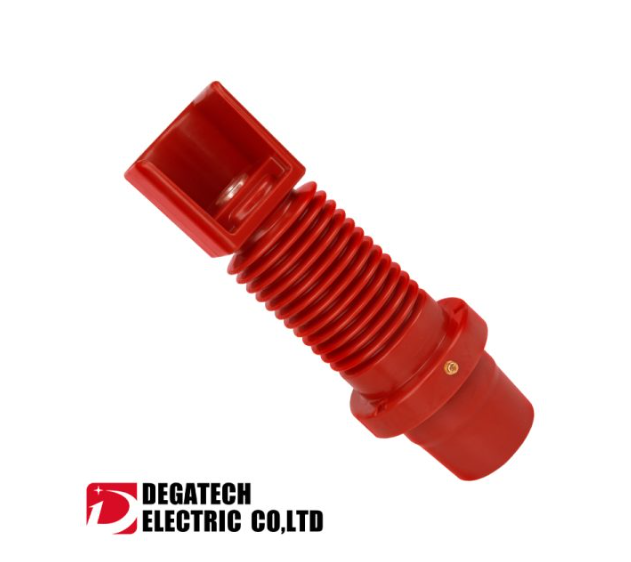
Epoxy Resin Bushings
Provide insulation and conductor support.
Protection Relays
Monitor and protect the electrical network.
Control and Monitoring Units
Enable operation, automation, and diagnostics.
Key Features of Solid Insulated Switchgear
SF6-Free Design
Eliminates greenhouse gas emissions associated with traditional GIS systems.
Compact Structure
Requires less installation space than conventional air-insulated systems.
Sealed Insulation System
Protects internal components from dust, moisture, and contaminants.
High Reliability
Provides stable performance in demanding environments.
Low Maintenance
Sealed construction minimizes service requirements.
Enhanced Safety
Reduces the risk of insulation failure and arc faults.
Advantages of Solid Insulated Switchgear
Environmental Sustainability
No SF6 gas means a significantly lower environmental impact.
Improved Operational Safety
Solid insulation minimizes exposure to live parts.
Reduced Maintenance Costs
No gas handling, monitoring, or refilling requirements.
Long Service Life
Designed for decades of reliable operation.
Excellent Insulation Performance
Maintains dielectric strength under harsh operating conditions.
Space Efficiency
Ideal for urban substations and compact installations.
Applications of Solid Insulated Switchgear
Utility Distribution Networks
Used in medium-voltage substations and distribution systems.
Industrial Facilities
Suitable for manufacturing plants, mining sites, and processing facilities.
Renewable Energy Projects
Common in:
- Solar power plants
- Wind farms
- Energy storage systems
Commercial Buildings
Installed in airports, hospitals, and data centers.
Infrastructure Projects
Support railways, metros, and public utilities.
Solid Insulated Switchgear vs Gas Insulated Switchgear
| Feature | Solid Insulated Switchgear | Gas Insulated Switchgear |
|---|---|---|
| Insulation Medium | Solid Dielectric Material | SF6 Gas |
| Environmental Impact | Very Low | Higher |
| Maintenance | Low | Moderate |
| Gas Handling | Not Required | Required |
| Safety | High | High |
| Sustainability | Excellent | Limited |
SIS provides many of the compactness benefits of GIS while eliminating SF6-related concerns.
Solid Insulated Switchgear vs Air Insulated Switchgear
| Feature | Solid Insulated Switchgear | Air Insulated Switchgear |
|---|---|---|
| Footprint | Compact | Larger |
| Environmental Protection | Excellent | Moderate |
| Insulation Reliability | High | Good |
| Maintenance | Low | Moderate |
| Installation Space | Reduced | Greater |
Solid insulation allows more compact and sealed equipment designs.
Voltage Ratings of Solid Insulated Switchgear
Common voltage classes include:
| Voltage Rating | Typical Applications |
|---|---|
| 12kV | Industrial and utility systems |
| 24kV | Renewable energy and substations |
| 36kV | Advanced distribution networks |
| 40.5kV | Specialized medium-voltage applications |
The selected voltage rating depends on system requirements.
How to Choose Solid Insulated Switchgear
Evaluate Voltage Requirements
Select equipment matching the system voltage.
Consider Environmental Conditions
Assess indoor, outdoor, industrial, or coastal installation environments.
Review Protection Requirements
Ensure adequate fault interruption and protection capabilities.
Check Standards Compliance
Look for products tested according to IEC standards.
Assess Manufacturer Expertise
Choose suppliers with proven experience in solid insulation technology.
Plan for Future Expansion
Select scalable switchgear solutions where possible.

Solid insulated switchgear for medium voltage power distribution
Future Trends in Solid Insulated Switchgear
Growing SF6-Free Adoption
Environmental regulations continue driving demand for SIS technology.
Digital Monitoring Integration
Smart sensors improve maintenance and operational visibility.
Compact Modular Designs
Manufacturers are developing increasingly space-efficient solutions.
Renewable Energy Expansion
Growing renewable projects require environmentally friendly switchgear.
Advanced Insulation Materials
New resin technologies continue improving reliability and performance.
FAQs
What is solid insulated switchgear?
Solid insulated switchgear is medium-voltage switchgear that uses solid dielectric materials instead of SF6 gas for insulation.
Why is solid insulated switchgear considered environmentally friendly?
Because it eliminates SF6 gas, which is a potent greenhouse gas.
What are the main components of solid insulated switchgear?
Vacuum circuit breakers, embedded poles, epoxy resin bushings, busbars, and protection relays.
Where is solid insulated switchgear used?
Utilities, industrial facilities, renewable energy projects, substations, and commercial infrastructure.
What are the advantages of solid insulated switchgear?
Environmental sustainability, compact size, low maintenance, high reliability, and enhanced safety.
How does solid insulated switchgear compare to GIS?
It offers similar compactness and reliability while eliminating SF6-related environmental concerns.
Conclusion
Solid insulated switchgear is transforming the medium-voltage power distribution industry by providing a safe, reliable, and environmentally responsible alternative to traditional gas-insulated systems. Through the combination of solid insulation materials and vacuum interruption technology, SIS delivers outstanding performance while supporting global sustainability goals.
As utilities and industries increasingly adopt SF6-free solutions, solid insulated switchgear will continue to play a vital role in the development of smarter, greener, and more resilient electrical networks.

Wind Substation Equipment: Types, Functions, and Selection Guide
Wind substation equipment plays a critical role in collecting, transforming, protecting, and transmitting electricity generated by wind turbines. From medium-voltage (MV) switchgear and power transformers to high-voltage (HV) equipment, protection [...]

Solar Farm Switchgear: Selection, Design, and Application Guide
Solar farm switchgear is an essential part of the electrical infrastructure used to collect, control, protect, and distribute power generated by photovoltaic (PV) systems. From inverter output circuits and transformer [...]

Future-Proof Switchgear: Design, Selection, and Long-Term Reliability
Future-proof switchgear is designed and selected to accommodate changing electrical loads, evolving technologies, operational requirements, and future expansion with minimal disruption. For industrial facilities, commercial buildings, utilities, renewable energy projects, [...]