
Medium Voltage Switchgear: Powerful Insights to Improve Power Distribution, Safety, and Reliability
The following is the table of contents for this article.
Thanks for sharing the article.
Introduction to Medium Voltage Switchgear
What is Medium Voltage Switchgear?
Medium voltage switchgear refers to electrical equipment designed to control, protect, and isolate electrical circuits operating in the medium voltage range, typically from 1 kV to 36 kV. It plays a crucial role in ensuring safe and reliable distribution of electrical power across industrial, commercial, and utility networks.
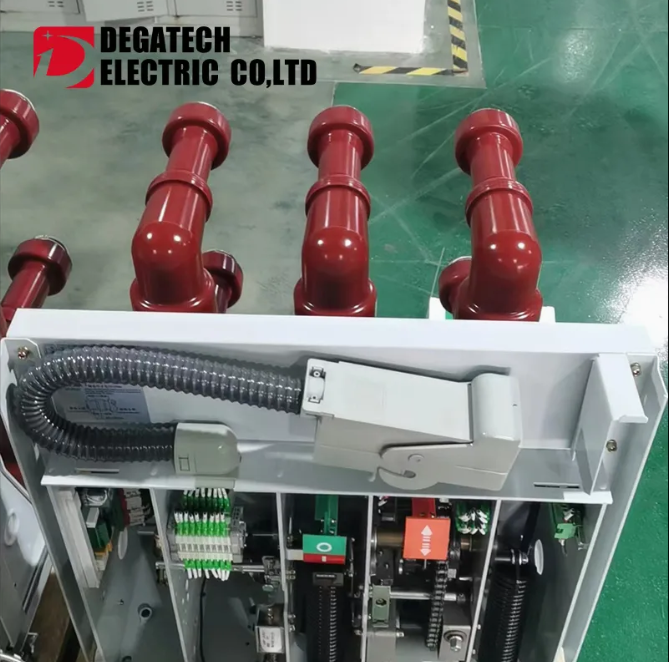
A medium voltage switchgear system includes devices such as circuit breakers, disconnect switches, fuses, and protective relays housed in a metal enclosure. These components work together to manage electrical power flow and protect equipment from faults.
Importance in Power Distribution Systems
In modern electrical networks, medium voltage switchgear is essential for:
- Safe distribution of electrical power
- Protection against overloads and short circuits
- Isolation of faulty sections
- Ensuring continuous power supply
Without it, electrical systems would be vulnerable to failures, outages, and safety hazards.
Working Principle of Medium Voltage Switchgear
Power Flow and Control Mechanism
Medium voltage switchgear controls the flow of electricity by opening and closing circuits based on system requirements. It ensures that power is distributed efficiently while maintaining system stability.
Fault Detection and Isolation
When a fault such as a short circuit occurs, protective relays detect abnormal conditions and trigger circuit breakers to isolate the faulty section.
Switching Operations Explained
Switching operations involve:
- Closing circuits to allow power flow
- Opening circuits to interrupt power
- Transferring loads between sources
Types of Medium Voltage Switchgear

Air Insulated Switchgear (AIS)
Uses air as the primary insulating medium. It requires more space but is cost-effective and widely used.
Gas Insulated Switchgear (GIS)
Uses sulfur hexafluoride (SF₆) gas for insulation, allowing compact design and high reliability.
Vacuum Switchgear
Uses vacuum interrupters to extinguish arcs, offering excellent performance and long life.
Comparison of Switchgear Types
| Type | Insulation | Space Requirement | Application |
|---|---|---|---|
| AIS | Air | High | Outdoor substations |
| GIS | SF₆ Gas | Low | Urban substations |
| Vacuum | Vacuum | Moderate | Industrial systems |
Key Components of Medium Voltage Switchgear
Circuit Breakers
Automatically interrupt fault currents to protect the system.
Busbars
Conduct electrical power between different components.
Disconnectors and Isolators
Used to safely isolate sections of the system for maintenance.
Protective Relays
Detect abnormal conditions and initiate protective actions.
Advantages of Medium Voltage Switchgear
High Reliability
Ensures continuous and stable power distribution.
Enhanced Safety
Protects equipment and personnel from electrical hazards.
Compact Design (GIS Systems)
Gas-insulated systems save space in urban installations.
Applications of Medium Voltage Switchgear
Industrial Plants
Used to power heavy machinery and production systems.
Power Generation Stations
Essential for controlling generated electricity.
Commercial Buildings
Ensures safe power distribution in large facilities.
Renewable Energy Systems
Used in solar and wind power installations.
Design and Construction Features
Insulation Systems
Provide electrical isolation between components.
Enclosure Design
Protects internal components from environmental conditions.
Thermal and Electrical Considerations
Ensures safe operation under high load conditions.
Safety Standards and Protection
IEC and IEEE Standards
Medium voltage switchgear must comply with international standards such as IEC 62271 and IEEE guidelines.
Arc Flash Protection
Designed to minimize damage caused by electrical arcs.
Grounding and Earthing Systems
Ensures safe dissipation of fault currents.
Installation Guidelines
Site Preparation
Proper foundation and environmental conditions are essential.
Assembly and Testing
Includes mechanical and electrical testing before operation.
Common Installation Errors
- Incorrect grounding
- Poor alignment
- Improper cable connections
Maintenance of Medium Voltage Switchgear
Preventive Maintenance
Regular inspections help prevent failures.
Predictive Maintenance
Uses sensors and data analytics to predict issues.
Fault Diagnosis Techniques
Identifies and resolves electrical problems quickly.

Medium Voltage Switchgear vs Low Voltage Switchgear
Voltage Levels and Applications
Medium voltage switchgear handles higher voltages than low voltage systems.
Performance Differences
MV systems are designed for higher power loads and industrial use.
Cost Comparison
MV switchgear is more expensive but essential for large-scale operations.
Future Trends in Medium Voltage Switchgear
Digital Substations
Integration with digital monitoring and control systems.
Smart Monitoring Systems
Real-time diagnostics improve efficiency and reliability.
Eco-Friendly SF₆ Alternatives
Development of environmentally friendly insulation gases.
Frequently Asked Questions (FAQs)
1. What is medium voltage switchgear used for?
It is used to control and protect electrical systems operating between 1 kV and 36 kV.
2. What are the types of medium voltage switchgear?
Air insulated, gas insulated, and vacuum switchgear.
3. Why is switchgear important?
It ensures safety, reliability, and fault protection in power systems.
4. Where is medium voltage switchgear used?
Industries, power plants, commercial buildings, and renewable energy systems.
5. What are the main components?
Circuit breakers, busbars, relays, and isolators.
6. How often should maintenance be done?
Regular preventive maintenance is recommended based on usage and standards.
Conclusion
Medium voltage switchgear is a critical component in modern electrical power systems, ensuring safe, efficient, and reliable distribution of electricity. Its ability to protect equipment, isolate faults, and manage power flow makes it indispensable in industrial, commercial, and utility applications.
With advancements in digital technology and smart monitoring, medium voltage switchgear is evolving into more intelligent and eco-friendly systems. Proper selection, installation, and maintenance are key to ensuring long-term performance and operational safety.

Wind Substation Equipment: Types, Functions, and Selection Guide
Wind substation equipment plays a critical role in collecting, transforming, protecting, and transmitting electricity generated by wind turbines. From medium-voltage (MV) switchgear and power transformers to high-voltage (HV) equipment, protection [...]

Solar Farm Switchgear: Selection, Design, and Application Guide
Solar farm switchgear is an essential part of the electrical infrastructure used to collect, control, protect, and distribute power generated by photovoltaic (PV) systems. From inverter output circuits and transformer [...]

Future-Proof Switchgear: Design, Selection, and Long-Term Reliability
Future-proof switchgear is designed and selected to accommodate changing electrical loads, evolving technologies, operational requirements, and future expansion with minimal disruption. For industrial facilities, commercial buildings, utilities, renewable energy projects, [...]