

High Voltage Circuit Breaker: 11 Powerful Insights into Protection, Types, and Applications
The following is the table of contents for this article.
Thanks for sharing the article.
Outline
| Heading Level | Section |
|---|---|
| H1 | High Voltage Circuit Breaker: 11 Powerful Insights into Protection, Types, and Applications |
| H2 | Introduction to High Voltage Circuit Breakers |
| H3 | Importance of High Voltage Protection in Power Systems |
| H4 | Overview of Circuit Interruption Technology |
| H2 | What Is a High Voltage Circuit Breaker? |
| H3 | Definition and Basic Concept |
| H4 | Voltage Range and Classification |
| H2 | Working Principle of a High Voltage Circuit Breaker |
| H3 | Fault Detection and Tripping Mechanism |
| H4 | Arc Formation and Arc Extinction |
| H2 | Major Components of High Voltage Circuit Breakers |
| H3 | Interrupter Chamber |
| H4 | Operating Mechanism |
| H4 | Insulation System |
| H4 | Control and Protection System |
| H2 | Types of High Voltage Circuit Breakers |
| H3 | Oil Circuit Breaker |
| H4 | Air Blast Circuit Breaker |
| H4 | SF6 Gas Circuit Breaker |
| H4 | Vacuum Circuit Breaker |
| H2 | Advantages of Modern High Voltage Circuit Breakers |
| H3 | Improved Safety and Reliability |
| H4 | Reduced Maintenance |
| H4 | Environmental Considerations |
| H2 | Applications of High Voltage Circuit Breakers |
| H3 | Power Transmission Networks |
| H4 | Substations |
| H4 | Industrial Power Systems |
| H2 | Technical Specifications of High Voltage Circuit Breakers |
| H3 | Typical Ratings and Standards |
| H4 | Electrical and Mechanical Performance |
| H2 | Installation and Maintenance |
| H3 | Installation Requirements |
| H4 | Preventive Maintenance Practices |
| H2 | Smart Grid Integration and Future Trends |
| H3 | Digital Monitoring |
| H4 | Eco-Friendly Technologies |
| H2 | Frequently Asked Questions |
| H2 | Conclusion |
High Voltage Circuit Breaker: 11 Powerful Insights into Protection, Types, and Applications
Introduction to High Voltage Circuit Breakers
A high voltage circuit breaker is a critical protective device used in electrical power systems to interrupt abnormal current flow during faults such as short circuits, overloads, or equipment failures. These breakers are designed to handle high voltage levels typically above 72.5 kV, making them essential components in transmission networks and large electrical substations.
Power systems rely heavily on high voltage circuit breakers to maintain system stability, reliability, and safety. Without these devices, electrical faults could cause severe damage to equipment, widespread power outages, and even dangerous safety hazards.
As modern power networks grow in complexity, high voltage circuit breakers play an increasingly important role in grid protection, load management, and network control.
Importance of High Voltage Protection in Power Systems
Electrical power systems operate under extremely high voltages to efficiently transmit electricity across long distances. However, these high voltages also increase the potential risks associated with faults and equipment failures.
High voltage circuit breakers protect the system by:
- Detecting abnormal current conditions
- Interrupting fault currents quickly
- Isolating faulty sections of the network
- Preventing cascading failures
These protective actions help maintain continuous and reliable electricity supply.
Overview of Circuit Interruption Technology
The fundamental purpose of a circuit breaker is to interrupt the flow of electrical current when necessary. In high voltage systems, interrupting current is more complex because the energy involved is significantly larger.
To safely interrupt current, circuit breakers use special arc extinction technologies, including:
- Oil insulation
- Compressed air
- Sulfur hexafluoride gas
- Vacuum technology
Each method offers different advantages in terms of performance, maintenance, and environmental impact.
What Is a High Voltage Circuit Breaker?
Definition and Basic Concept
A high voltage circuit breaker is an electrical switching device capable of making, carrying, and breaking currents under both normal and abnormal operating conditions in high voltage power systems.
The device automatically disconnects circuits during faults to protect equipment such as:
- Transformers
- Transmission lines
- Generators
- Electrical substations
Voltage Range and Classification
High voltage circuit breakers are generally classified based on their operating voltage levels.
| Voltage Category | Typical Range |
|---|---|
| Medium Voltage | 1 kV – 72.5 kV |
| High Voltage | 72.5 kV – 245 kV |
| Extra High Voltage | 245 kV – 765 kV |
| Ultra High Voltage | Above 765 kV |
High voltage breakers are commonly used in transmission systems and large substations.
Working Principle of a High Voltage Circuit Breaker
Fault Detection and Tripping Mechanism
The operation of a high voltage circuit breaker begins with fault detection. Protective relays continuously monitor electrical parameters such as:
- Current
- Voltage
- Frequency
- Phase angle
When a fault occurs, the relay sends a trip signal to the circuit breaker, initiating the opening process.
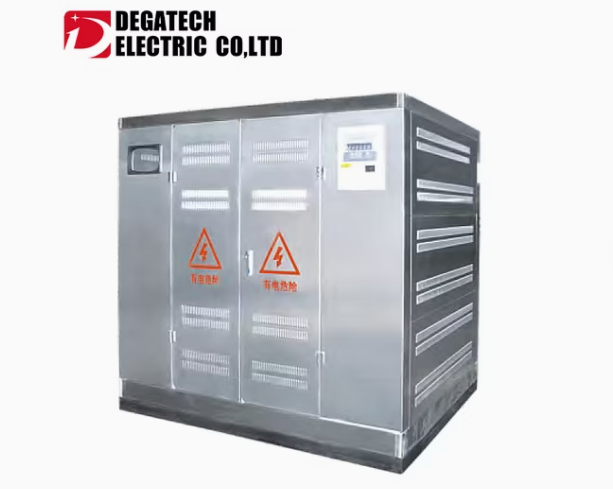
Arc Formation and Arc Extinction
When the breaker contacts separate, an electric arc forms between them because the current continues flowing through ionized air or gas.
The breaker must extinguish this arc quickly to stop the current flow.
Different arc quenching methods are used depending on the breaker type, including:
- Oil arc cooling
- Gas blast interruption
- Vacuum arc extinction
- Air blast cooling
Once the arc is extinguished, the electrical circuit is completely disconnected.
Major Components of High Voltage Circuit Breakers
Interrupter Chamber
The interrupter chamber contains the contacts and the medium used for arc extinction.
It is designed to withstand:
- High electrical stress
- High temperatures
- High mechanical forces
Operating Mechanism
The operating mechanism controls the opening and closing of the breaker contacts.
Common mechanisms include:
- Spring-operated systems
- Hydraulic mechanisms
- Pneumatic mechanisms
- Motor-driven mechanisms
Insulation System
Insulation is necessary to prevent electrical breakdown between components.
Common insulating materials include:
- Porcelain
- Epoxy resin
- Composite polymers
- Gas insulation
Control and Protection System
The control system includes protective relays, sensors, and communication interfaces that manage breaker operations.
Modern systems often incorporate digital monitoring technologies.
Types of High Voltage Circuit Breakers
Oil Circuit Breaker
Oil circuit breakers use insulating oil to extinguish the arc and provide insulation between contacts.
Advantages:
- Good insulation properties
- Effective arc cooling
Disadvantages:
- High maintenance
- Fire hazards
- Environmental concerns
Air Blast Circuit Breaker
Air blast breakers use high-pressure air to extinguish the arc.
Advantages:
- Fast operation
- Suitable for high voltage systems
Disadvantages:
- Complex air compression system
- Noise during operation
SF6 Gas Circuit Breaker
These breakers use sulfur hexafluoride (SF6) gas as the insulating and arc-quenching medium.
Advantages:
- Excellent dielectric strength
- Compact design
- High reliability
Disadvantages:
- Environmental impact due to greenhouse gas emissions
Vacuum Circuit Breaker
Vacuum breakers use vacuum interrupters to extinguish the arc.
Advantages:
- Low maintenance
- Long service life
- Environmentally friendly
Vacuum circuit breakers are widely used in medium and high voltage applications.
Advantages of Modern High Voltage Circuit Breakers
Improved Safety and Reliability
Modern circuit breakers are designed with advanced protection systems that reduce the risk of electrical failures.
Reduced Maintenance Requirements
New technologies such as vacuum interrupters significantly reduce maintenance needs compared to traditional breakers.
Environmental Considerations
Many modern designs focus on eco-friendly insulation alternatives to reduce environmental impact.
Applications of High Voltage Circuit Breakers
Power Transmission Networks
High voltage circuit breakers protect transmission lines carrying electricity across long distances.
Electrical Substations
Substations use breakers to control and isolate different sections of the power grid.
Industrial Power Systems
Large industrial facilities rely on high voltage breakers for equipment protection and power distribution control.
Technical Specifications of High Voltage Circuit Breakers
Typical specifications include:
| Parameter | Typical Range |
|---|---|
| Rated Voltage | 72.5 kV – 800 kV |
| Rated Current | 1000 A – 4000 A |
| Short Circuit Breaking Current | 25 kA – 63 kA |
| Frequency | 50 / 60 Hz |
| Mechanical Life | 10,000 – 30,000 operations |
These specifications vary depending on system requirements and breaker design.

Installation and Maintenance
Installation Requirements
Proper installation ensures safe operation.
Important considerations include:
- Correct grounding
- Adequate insulation clearance
- Mechanical stability
- Proper control wiring
Preventive Maintenance Practices
Maintenance procedures include:
- Contact inspection
- Insulation testing
- Mechanical operation testing
- Control circuit verification
Routine maintenance improves system reliability and lifespan.
Smart Grid Integration and Future Trends
Digital Monitoring
Modern high voltage circuit breakers are increasingly equipped with:
- Condition monitoring sensors
- Remote control systems
- Digital protection relays
These technologies improve real-time monitoring and predictive maintenance.
Eco-Friendly Technologies
Research is ongoing to replace SF6 gas with environmentally friendly alternatives such as:
- Dry air insulation
- Vacuum switching technology
- Hybrid insulation systems
Frequently Asked Questions
1. What is the main purpose of a high voltage circuit breaker?
Its main purpose is to protect power systems by interrupting fault currents and isolating faulty sections of the network.
2. What voltage level is considered high voltage?
High voltage generally refers to electrical systems operating above 72.5 kV.
3. Which type of high voltage circuit breaker is most common?
SF6 gas circuit breakers are widely used in high voltage transmission systems.
4. Are vacuum circuit breakers used for high voltage?
Yes, vacuum circuit breakers are commonly used in medium voltage and some high voltage applications.
5. How often should high voltage circuit breakers be maintained?
Maintenance intervals vary, but annual inspections and periodic testing are recommended.
6. What is the lifespan of a high voltage circuit breaker?
Most high voltage breakers have a service life of 20–40 years depending on operating conditions.
Conclusion
The high voltage circuit breaker is one of the most important devices in modern electrical power systems. By detecting faults and interrupting high current flows, it ensures the safety and reliability of power transmission networks.
With advances in vacuum switching technology, digital monitoring, and eco-friendly insulation, high voltage circuit breakers continue to evolve, providing improved protection and efficiency for future power grids.

Wind Substation Equipment: Types, Functions, and Selection Guide
Wind substation equipment plays a critical role in collecting, transforming, protecting, and transmitting electricity generated by wind turbines. From medium-voltage (MV) switchgear and power transformers to high-voltage (HV) equipment, protection [...]

Solar Farm Switchgear: Selection, Design, and Application Guide
Solar farm switchgear is an essential part of the electrical infrastructure used to collect, control, protect, and distribute power generated by photovoltaic (PV) systems. From inverter output circuits and transformer [...]

Future-Proof Switchgear: Design, Selection, and Long-Term Reliability
Future-proof switchgear is designed and selected to accommodate changing electrical loads, evolving technologies, operational requirements, and future expansion with minimal disruption. For industrial facilities, commercial buildings, utilities, renewable energy projects, [...]