

Eco-Friendly VCB Benefits
The following is the table of contents for this article.
Thanks for sharing the article.
High-Performance Overview of the Eco-Friendly VCB for Sustainable Power Systems
The Eco-Friendly VCB (Vacuum Circuit Breaker) has rapidly become a core component in modern medium-voltage power distribution systems as the global shift toward sustainable energy grows stronger. Traditional circuit breakers often rely on insulating mediums or gases that may have environmental drawbacks—particularly sulfur hexafluoride (SF₆), a gas with extremely high global warming potential. Eco-Friendly VCB technology eliminates such environmental risks by using vacuum as the interrupting medium, enabling high-performance arc extinction without emitting greenhouse gases or requiring complex gas-handling procedures. This innovation positions the Eco-Friendly VCB as a greener, safer, and more energy-efficient choice for utilities, industrial sites, commercial buildings, and renewable energy distribution networks.
Modern electrical systems demand reliable switching solutions that minimize downtime, reduce maintenance costs, and meet strict environmental regulations. The Eco-Friendly VCB directly addresses these needs through its sealed vacuum interrupter, low energy consumption, high mechanical endurance, and minimal environmental footprint. By replacing gas-insulated designs with vacuum technology, the Eco-Friendly VCB supports global ESG goals and aligns with sustainable development strategies. Moreover, its adaptability to smart grid systems, digital monitoring, and IoT-based maintenance frameworks makes it suitable for both current and next-generation electrical architectures.
Outline for Eco-Friendly VCB
| Section | Subtopics |
|---|---|
| Introduction to Eco-Friendly VCB | Definition, sustainability value |
| Arc Interruption in Vacuum | Environmental benefits |
| Internal Structure | Vacuum interrupter, mechanism |
| Comparison to SF₆ Breakers | Emissions, safety |
| Dielectric Strength | Vacuum insulation advantages |
| Contact Materials | CuCr, erosion resistance |
| Mechanical Operation | Spring vs magnetic actuator |
| Energy Efficiency | Low control power |
| Smart Monitoring | Sensors, IoT integration |
| Environmental Impact | Zero emissions |
| Manufacturing Innovations | Green materials |
| Applications | Utility, industry, renewables |
| Grid Compatibility | Smart grid-ready |
| Maintenance Strategy | Low maintenance |
| Safety Benefits | No toxic gas |
| Installation Guidelines | Indoor switchgear |
| Reliability Factors | Vacuum integrity |
| Failure Analysis | Mechanism fatigue, vacuum loss |
| Testing Standards | IEC 62271 |
| Cost & Lifecycle | CAPEX vs OPEX |
| Return on Investment | Energy and maintenance savings |
| Eco-Friendly VCB Advantages | Sustainability, efficiency |
| Limitations | Heat dissipation |
| Future Trends | Gas-free switchgear evolution |
| Conclusion | Recommendations |
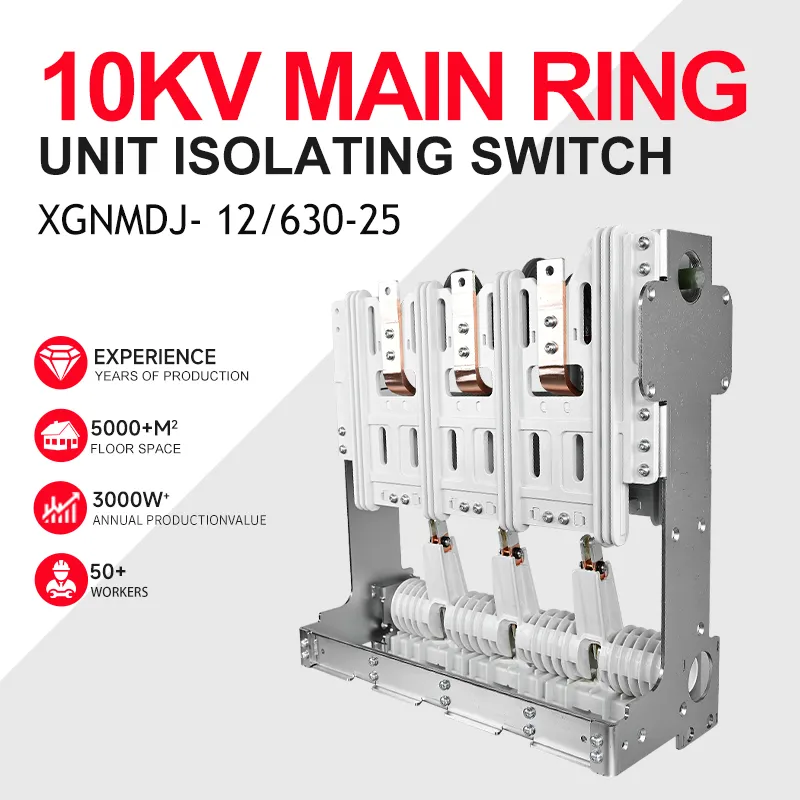
Eco-Friendly VCB: Sustainability, Technology, and High-Performance Integration
As power systems transition toward lower environmental impact, the Eco-Friendly VCB represents a breakthrough in green electrical technology. Unlike conventional SF₆ circuit breakers, which rely on a greenhouse gas with thousands of times the global warming potential of CO₂, vacuum circuit breakers eliminate harmful emissions entirely. The vacuum medium provides a clean, stable, and sealed environment where electrical arcs cannot sustain themselves. This leads to extremely fast dielectric recovery and reliable interruption during fault conditions. Because the vacuum interrupter is hermetically sealed, it requires no refilling, gas monitoring, or leak detection equipment—resulting in lower operational risks and long-term environmental benefits.
Inside an Eco-Friendly VCB, the vacuum interrupter is the heart of the system. Manufactured using high-purity ceramic and metal brazing technologies, the interrupter ensures excellent insulation strength and maintains vacuum levels for decades. The interrupter contacts, typically made from a copper–chromium alloy, offer exceptional arc resistance and low contact erosion, allowing the breaker to perform thousands of operations without degradation. This makes the Eco-Friendly VCB ideal for applications that require high switching frequency, such as renewable energy integration, where variable load patterns and frequent reconnection cycles demand resilience and stability.
The mechanical operating mechanism, whether spring-charged or magnetically actuated, ensures precise opening and closing operations. Magnetic actuators, in particular, reduce mechanical complexity and energy consumption, aligning perfectly with the eco-friendly goals of modern substations. When combined with digital sensors and SCADA connectivity, the Eco-Friendly VCB becomes an intelligent device capable of predictive maintenance, real-time diagnostics, and seamless integration within smart grid systems.
Environmental Advantages, Electrical Performance, and System Compatibility
From an environmental standpoint, the Eco-Friendly VCB eliminates gas emissions entirely. SF₆, the most commonly used gas in medium- and high-voltage switchgear, has a global warming potential approximately 23,000 times higher than CO₂. Regulatory pressure is increasing worldwide as governments and utilities seek alternatives. The Eco-Friendly VCB not only meets these regulatory standards but surpasses them by offering a solution that inherently avoids harmful substances. With no need for gas pressure monitoring, recovery equipment, or leak-detection protocols, it reduces operational complexity and environmental risk.
In performance terms, the Eco-Friendly VCB provides rapid dielectric recovery, high short-circuit breaking capacity, and reliable operation across a wide range of environmental conditions. Unlike air- or gas-insulated systems that can experience pressure variations due to temperature changes, vacuum insulation remains stable regardless of weather or humidity. This makes the Eco-Friendly VCB an excellent choice for underground electrical rooms, industrial plants, and renewable energy containers where heat, moisture, and space constraints are significant challenges.
The Eco-Friendly VCB is widely compatible with switchgear platforms such as KYN28, XGN66, and other metal-clad or fixed-mounted systems. Its compact size and safety characteristics allow installation in commercial buildings, hospitals, data centers, metro systems, and wind or solar power stations. In many cases, the Eco-Friendly VCB replaces older oil or SF₆ breakers, improving reliability and reducing environmental impact while providing long-term cost savings.
Smart Grid Integration, Maintenance Reduction, and Future-Proof Technology
Eco-Friendly VCB systems support digital transformation across power networks. Equipped with temperature sensors, contact wear indicators, and real-time electrical monitoring, the breaker becomes a smart asset capable of integrating with SCADA, IoT platforms, and advanced distribution management systems (ADMS). Predictive analytics help maintenance teams detect abnormalities long before failures occur, reducing downtime and extending equipment lifespan.
Because vacuum interrupters have no gas to monitor and very few moving parts, Eco-Friendly VCBs require minimal maintenance. Routine checks are limited to lubrication points (if applicable), secondary wiring inspections, and mechanical performance tests. This significantly lowers operational expenditures compared to SF₆ systems that require periodic gas inspections, refilling operations, and leak testing. For utilities and industrial operators, reduced maintenance translates into higher uptime and lower lifecycle costs.
Looking ahead, Eco-Friendly VCB technology is positioned to lead the transition toward fully gas-free switchgear. As more countries restrict SF₆ use and encourage sustainable innovations, vacuum technology becomes the preferred choice. Ongoing advancements in interrupter metallurgy, ceramic sealing, and magnetic actuation mechanisms will further enhance the performance, durability, and eco-friendliness of the next-generation vacuum circuit breakers.

Comparison Table: Eco-Friendly VCB vs. SF₆ Breaker vs. Oil Breaker
| Feature | Eco-Friendly VCB | SF₆ Breaker | Oil Breaker |
|---|---|---|---|
| Insulation Medium | Vacuum | SF₆ Gas | Mineral Oil |
| Environmental Impact | Excellent | Poor | Moderate |
| Maintenance | Very Low | Medium | High |
| Fire Safety | Excellent | Excellent | Low |
| Gas Handling | None | Required | None |
| Switching Frequency | High | Medium | Low |
| Installation | Indoor/compact | Indoor/outdoor | Outdoor |
Frequently Asked Questions
Is the Eco-Friendly VCB a suitable replacement for SF₆ breakers?
Yes. It provides equal or better performance without greenhouse gas emissions.
Does the Eco-Friendly VCB require gas monitoring?
No. The vacuum interrupter is sealed for life.
What voltage levels are Eco-Friendly VCBs used for?
Typically 3.3kV to 40.5kV in medium-voltage networks.
Are Eco-Friendly VCBs safe for indoor substations?
Absolutely. They are fire-safe, non-toxic, and compact.
What is the expected lifespan of an Eco-Friendly VCB?
Usually 25–30 years with minimal maintenance.
Do Eco-Friendly VCBs support smart grid communication?
Yes. Modern designs integrate sensors, IoT communication, and advanced diagnostics.
Conclusion
The Eco-Friendly VCB is at the forefront of sustainable power distribution technology. Its vacuum-based arc interruption, zero-emission operation, maintenance simplicity, and compatibility with modern smart grids make it an indispensable solution for future electrical networks. As the world shifts toward carbon neutrality and environmentally responsible engineering, Eco-Friendly VCB systems offer long-term reliability, lower lifecycle costs, and superior environmental protection—setting a new standard for medium-voltage switchgear across industries and utilities.
Suggested Internal Links
Vacuum Interrupter Technology
Gas-Free Switchgear Development
Dry Type Transformer Solutions
Suggested External Links
IEC 62271 Switchgear Standards
Global SF₆ Regulations Overview
Smart Grid Technology Research

Wind Substation Equipment: Types, Functions, and Selection Guide
Wind substation equipment plays a critical role in collecting, transforming, protecting, and transmitting electricity generated by wind turbines. From medium-voltage (MV) switchgear and power transformers to high-voltage (HV) equipment, protection [...]

Solar Farm Switchgear: Selection, Design, and Application Guide
Solar farm switchgear is an essential part of the electrical infrastructure used to collect, control, protect, and distribute power generated by photovoltaic (PV) systems. From inverter output circuits and transformer [...]

Future-Proof Switchgear: Design, Selection, and Long-Term Reliability
Future-proof switchgear is designed and selected to accommodate changing electrical loads, evolving technologies, operational requirements, and future expansion with minimal disruption. For industrial facilities, commercial buildings, utilities, renewable energy projects, [...]