
Eco-Friendly Switchgear: Sustainable Power Distribution for Modern Electrical Networks
The following is the table of contents for this article.
Thanks for sharing the article.
Eco-friendly switchgear refers to electrical switching equipment designed to minimize environmental impact while maintaining reliable power distribution and protection. Traditional switchgear systems often rely on insulating gases such as sulfur hexafluoride (SF₆), which has a very high global warming potential. Eco-friendly switchgear solutions are developed to reduce greenhouse gas emissions, improve energy efficiency, and support sustainable power infrastructure.
With the global push toward carbon neutrality and green energy systems, eco-friendly switchgear is becoming an essential component of modern electrical networks, including renewable energy plants, smart grids, and sustainable industrial facilities.
1. What is Eco-Friendly Switchgear? 🔌
Eco-friendly switchgear is a type of electrical switching and protection equipment designed using environmentally safe technologies and materials that reduce or eliminate harmful emissions.
These systems are used to:
- Control electrical circuits
- Protect equipment from faults
- Isolate sections of power systems
- Improve overall grid reliability
Unlike traditional switchgear that may rely heavily on high-impact insulating gases, eco-friendly switchgear uses alternative insulation technologies, vacuum interruption, and recyclable materials.
2. Why Eco-Friendly Switchgear is Important 🌍
The energy sector is one of the largest contributors to global greenhouse gas emissions. Traditional switchgear technologies often use SF₆ gas, which has a global warming potential thousands of times higher than carbon dioxide.
Eco-friendly switchgear helps address these concerns by:
- Reducing greenhouse gas emissions
- Supporting sustainable infrastructure
- Complying with environmental regulations
- Improving long-term operational safety
Many countries are introducing stricter regulations that encourage or require low-emission electrical equipment in power systems.
3. Key Technologies Used in Eco-Friendly Switchgear ⚙️
Several innovative technologies are used to make switchgear environmentally friendly.
Vacuum Interruption Technology
Vacuum circuit breakers interrupt electrical current in a sealed vacuum chamber.
Advantages include:
- No harmful gases
- Long operational life
- High reliability
- Minimal maintenance
Vacuum technology is commonly used in medium-voltage switchgear systems.
Solid Insulation Technology
Solid insulated switchgear replaces gas insulation with epoxy resin or other solid dielectric materials.
Benefits include:
- No gas leakage
- Compact design
- Reduced environmental impact
- Improved operational safety
Alternative Gas Insulation
Instead of SF₆, some switchgear uses environmentally friendly gas mixtures with much lower global warming potential.
Examples include:
- Fluoronitrile-based gases
- Clean air insulation
- CO₂-based insulation systems
These alternatives significantly reduce environmental risks while maintaining high insulation performance.
Air-Insulated Switchgear
Air-insulated switchgear uses ambient air as the insulating medium, eliminating the need for harmful gases.
Key benefits include:
- Simple design
- Easy maintenance
- Environmentally safe operation
However, air-insulated systems generally require more installation space compared to gas-insulated systems.
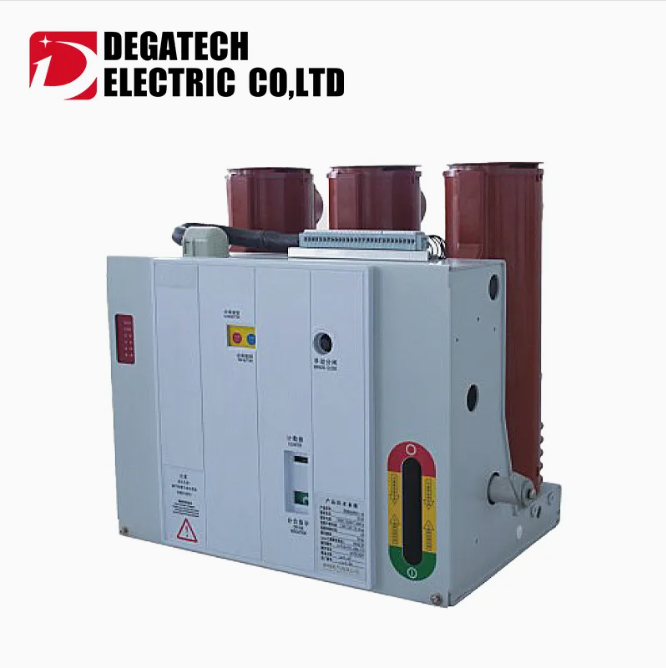
4. Main Components of Eco-Friendly Switchgear 🔧
Eco-friendly switchgear consists of several critical components that work together to control and protect electrical systems.
Circuit Breaker
Interrupts electrical current during faults or overload conditions.
Modern eco-friendly systems typically use vacuum circuit breakers.
Busbars
Conduct electrical power between switchgear components.
They are typically made from:
- Copper
- Aluminum
Disconnectors
Provide visible isolation of electrical circuits for maintenance and safety.
Protection Relays
Advanced digital relays detect abnormal conditions such as:
- Short circuits
- Overcurrent
- Voltage fluctuations
Insulation System
Eco-friendly switchgear uses insulation technologies such as:
- Solid insulation
- Clean air insulation
- Alternative low-impact gases
5. Types of Eco-Friendly Switchgear 🏭
Eco-friendly switchgear can be categorized based on voltage levels and insulation technologies.
Medium Voltage Eco-Friendly Switchgear
Typically operates between 1 kV and 36 kV.
Common applications include:
- Industrial facilities
- Renewable energy plants
- Commercial buildings
These systems often use vacuum breakers and solid insulation.
High Voltage Eco-Friendly Switchgear
Used in transmission networks operating above 36 kV.
Advanced technologies include:
- Alternative gas insulation
- Clean air insulated switchgear
- Vacuum switching technology
Compact Eco-Friendly Switchgear
Designed for installations with limited space.
Typical applications include:
- Urban substations
- Underground installations
- Offshore platforms
6. Advantages of Eco-Friendly Switchgear ⭐
Eco-friendly switchgear provides multiple operational and environmental benefits.
Reduced Environmental Impact
Eliminates or minimizes the use of harmful greenhouse gases.
Regulatory Compliance
Helps utilities meet increasingly strict environmental regulations.
Improved Safety
Many eco-friendly designs reduce the risk of gas leakage and hazardous exposure.
Lower Lifecycle Costs
Although initial investment may be higher, long-term savings occur through:
- Reduced maintenance
- Lower environmental compliance costs
- Longer equipment lifespan
Support for Renewable Energy
Eco-friendly switchgear integrates well with:
- Solar power plants
- Wind farms
- Energy storage systems
7. Applications of Eco-Friendly Switchgear ⚡
Eco-friendly switchgear is used in a wide range of electrical power systems.
Renewable Energy Facilities
Used in:
- Solar farms
- Wind power plants
- Hydroelectric systems
Utility Power Distribution
Electric utilities are adopting eco-friendly switchgear to reduce emissions and improve grid sustainability.
Industrial Plants
Large industries require reliable and environmentally responsible electrical infrastructure.
Examples include:
- Manufacturing plants
- Mining operations
- Oil and gas facilities
Commercial Buildings
Eco-friendly switchgear supports sustainable building designs such as:
- Green buildings
- Smart buildings
- Energy-efficient infrastructure
Transportation Infrastructure
Used in:
- Rail systems
- Airports
- Electric vehicle charging networks
8. Environmental Benefits 🌿
Eco-friendly switchgear plays an important role in environmental sustainability.
Key benefits include:
- Reduction in greenhouse gas emissions
- Lower environmental risk from gas leakage
- Use of recyclable materials
- Reduced carbon footprint of power systems
Many modern eco-friendly switchgear solutions are designed to support circular economy principles, allowing components to be recycled or reused at the end of their service life.
9. Challenges in Eco-Friendly Switchgear Development ⚠️
Despite its advantages, eco-friendly switchgear faces several challenges.
Higher Initial Cost
New technologies may require higher upfront investment compared to conventional switchgear.
Technology Transition
Utilities must adapt existing infrastructure to accommodate newer environmentally friendly technologies.

Performance Validation
Alternative insulating gases and materials must meet strict performance standards for:
- Dielectric strength
- Thermal stability
- Arc-quenching capability
10. Future Trends in Eco-Friendly Switchgear 🚀
The future of switchgear technology is moving toward fully sustainable and intelligent electrical systems.
Key trends include:
SF₆-Free Switchgear
Global initiatives are pushing for complete elimination of SF₆ gas.
Smart Switchgear
Integration with digital monitoring systems enables:
- Predictive maintenance
- Remote monitoring
- Grid automation
Compact Modular Designs
New eco-friendly switchgear systems are becoming more compact and modular, making them easier to install and maintain.
Integration with Smart Grids
Eco-friendly switchgear will play a crucial role in future smart and resilient electrical networks.
Conclusion 📘
Eco-friendly switchgear represents a major step toward sustainable power distribution and environmentally responsible electrical infrastructure. By replacing harmful insulating gases with vacuum technology, solid insulation, and low-impact alternatives, these systems significantly reduce the environmental footprint of electrical networks.
As industries and utilities strive to meet global sustainability goals, eco-friendly switchgear will continue to play a critical role in supporting clean energy integration, smart grid development, and long-term environmental protection.You can visit : https://chinadegatech.com/


Wind Substation Equipment: Types, Functions, and Selection Guide
Wind substation equipment plays a critical role in collecting, transforming, protecting, and transmitting electricity generated by wind turbines. From medium-voltage (MV) switchgear and power transformers to high-voltage (HV) equipment, protection [...]

Solar Farm Switchgear: Selection, Design, and Application Guide
Solar farm switchgear is an essential part of the electrical infrastructure used to collect, control, protect, and distribute power generated by photovoltaic (PV) systems. From inverter output circuits and transformer [...]

Future-Proof Switchgear: Design, Selection, and Long-Term Reliability
Future-proof switchgear is designed and selected to accommodate changing electrical loads, evolving technologies, operational requirements, and future expansion with minimal disruption. For industrial facilities, commercial buildings, utilities, renewable energy projects, [...]