
35kV Vacuum Circuit Breaker: Working Principle, Components, Types, and Applications
The following is the table of contents for this article.
Thanks for sharing the article.
A 35kV vacuum circuit breaker (VCB) is a medium-voltage electrical switching device designed to protect and control power systems operating up to 35 kilovolts. It interrupts electrical faults such as short circuits, overloads, and abnormal current conditions by extinguishing the arc in a vacuum environment.
Vacuum circuit breakers are widely used in power distribution networks, substations, industrial plants, and renewable energy facilities because of their high reliability, long service life, and minimal maintenance requirements.

What is a 35kV Vacuum Circuit Breaker?
A 35kV vacuum circuit breaker is an electrical protection device used in medium-voltage power systems. It operates by separating contacts inside a sealed vacuum chamber to interrupt the current flow during a fault condition.
When the contacts separate, an arc forms between them. However, because the arc occurs in a high vacuum, it extinguishes almost instantly, allowing the circuit breaker to safely interrupt the electrical current.
Key Characteristics
⚡ Rated voltage: up to 35 kV
⚡ High dielectric strength in vacuum
⚡ Fast arc extinction
⚡ Long mechanical and electrical life
⚡ Compact and environmentally friendly design
Working Principle of a 35kV Vacuum Circuit Breaker
The operating principle of a vacuum circuit breaker is based on arc interruption in a vacuum medium.
Step-by-Step Operation
- Normal Condition
- The breaker contacts remain closed.
- Electrical current flows through the contacts normally.
- Fault Detection
- Protection relays detect abnormal conditions such as short circuits or overloads.
- Trip Command
- The relay sends a signal to the breaker’s operating mechanism.
- Contact Separation
- The movable contact quickly separates from the fixed contact inside the vacuum interrupter.
- Arc Formation
- An electrical arc forms between the contacts.
- Arc Extinction
- The vacuum environment rapidly extinguishes the arc when the current passes through zero.
- Circuit Isolation
- The current stops flowing, protecting the electrical system.
Main Components of a 35kV Vacuum Circuit Breaker
1. Vacuum Interrupter
The vacuum interrupter is the core component where arc interruption occurs. It contains the fixed and movable contacts sealed in a vacuum chamber.
2. Fixed Contact
This stationary contact remains fixed inside the vacuum interrupter and carries current during normal operation.
3. Movable Contact
The movable contact opens and closes to interrupt or allow current flow.
4. Operating Mechanism
The operating mechanism controls the opening and closing of the breaker. Common mechanisms include:
- Spring-operated mechanism
- Motor-charged mechanism
- Magnetic actuator mechanism
5. Insulation System
The insulation system ensures electrical isolation and safety, usually made from:
- Epoxy resin
- Porcelain
- Composite materials
6. Control System
This includes protection relays, trip coils, and control circuits that manage breaker operation.
Types of 35kV Vacuum Circuit Breakers
Indoor Vacuum Circuit Breaker
Used inside electrical switchgear panels or substations where environmental conditions are controlled.
Applications
- Industrial distribution systems
- Power plants
- Substations
Outdoor Vacuum Circuit Breaker
Designed to operate in harsh environmental conditions.
Features
- Weather-resistant housing
- High mechanical strength
- Suitable for outdoor substations
Embedded Pole VCB
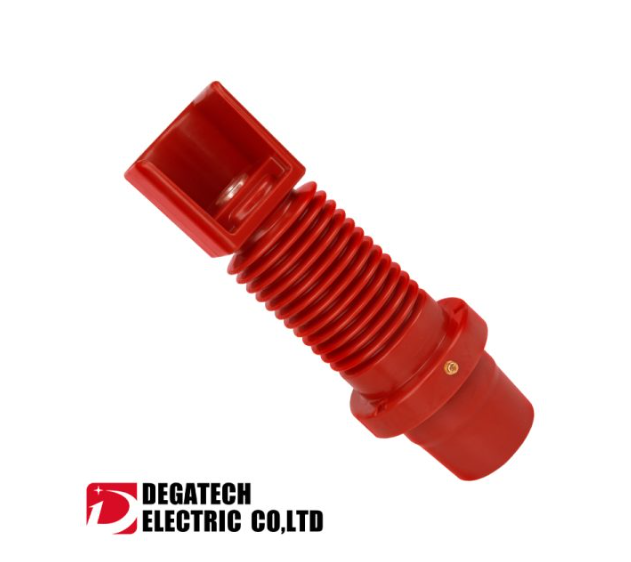
The vacuum interrupter is embedded in epoxy resin insulation for improved reliability.
Advantages of 35kV Vacuum Circuit Breakers
High Reliability
Vacuum circuit breakers provide stable performance with very low failure rates.
Long Service Life
They can perform tens of thousands of operations without significant wear.
Minimal Maintenance
Unlike oil circuit breakers, vacuum breakers require very little maintenance.
Fast Arc Extinction
The vacuum medium allows quick arc interruption, improving protection performance.
Environmentally Friendly
VCBs do not use oil or SF6 gas, making them safer for the environment.
Compact Design
Modern vacuum circuit breakers are lightweight and space-saving.

Applications of 35kV Vacuum Circuit Breakers
35kV VCBs are widely used in medium-voltage power distribution systems.
Power Distribution Networks
They protect transformers, feeders, and electrical equipment in utility networks.
Industrial Plants
Industries such as steel, cement, and mining rely on vacuum circuit breakers for reliable electrical protection.
Substations
35kV VCBs are commonly installed in medium-voltage substations.
Renewable Energy Systems
They are used in solar farms and wind power plants for grid connection protection.
Railway Electrification
Railway power supply systems use VCBs for switching and protection.
Technical Specifications
Typical specifications of a 35kV vacuum circuit breaker include:
| Parameter | Typical Value |
|---|---|
| Rated Voltage | 35 kV |
| Rated Frequency | 50/60 Hz |
| Rated Current | 630A – 3150A |
| Rated Short-Circuit Breaking Current | 20kA – 40kA |
| Mechanical Life | Up to 30,000 operations |
| Electrical Life | Up to 10,000 operations |
Comparison with Other Circuit Breakers
| Type | Insulation Medium | Maintenance | Environmental Impact |
|---|---|---|---|
| Vacuum Circuit Breaker | Vacuum | Low | Eco-friendly |
| Oil Circuit Breaker | Oil | High | Oil leakage risk |
| SF6 Circuit Breaker | SF6 Gas | Moderate | Greenhouse gas concerns |
| Air Circuit Breaker | Air | Moderate | Large size |
Vacuum circuit breakers are increasingly preferred for medium-voltage applications due to their reliability and environmental advantages.
Installation Considerations
When installing a 35kV vacuum circuit breaker, several factors should be considered:
- Proper grounding of the system
- Correct alignment of contacts
- Adequate insulation clearance
- Reliable control and protection systems
- Regular inspection and testing
Professional installation ensures safe and efficient operation.
Maintenance of 35kV Vacuum Circuit Breakers
Although vacuum circuit breakers require minimal maintenance, periodic inspections are recommended.
Common Maintenance Tasks
✔ Contact wear inspection
✔ Mechanical operation testing
✔ Insulation resistance testing
✔ Control circuit inspection
✔ Cleaning of insulating surfaces
Preventive maintenance helps maintain optimal performance and reliability.
Future Trends in Vacuum Circuit Breaker Technology
Modern vacuum circuit breaker technology continues to evolve with innovations such as:
⚡ Smart monitoring systems
⚡ Digital protection integration
⚡ Solid insulation technology
⚡ Compact modular designs
⚡ Remote operation and automation
These advancements are improving power system reliability and efficiency.
Conclusion
A 35kV vacuum circuit breaker plays a crucial role in protecting medium-voltage power systems from electrical faults. Its ability to interrupt current quickly using vacuum technology makes it a reliable, efficient, and environmentally friendly solution for modern electrical networks.
With advantages such as long service life, low maintenance, compact design, and high reliability, 35kV VCBs have become a preferred choice for utilities, industrial facilities, substations, and renewable energy systems.

Switchgear for Manufacturing Plant: Selection & Design Guide
Manufacturing plants depend on stable electrical power to operate production machinery, motors, process equipment, lighting, HVAC, compressed-air systems, material-handling equipment, and other plant services. Switchgear for manufacturing plant applications provides [...]

Learn how to select switchgear for utility applications, including substations, MV distribution, protection, reliability, automation
Utilities depend on electrical networks that must distribute power safely, isolate faults, and support reliable service across substations and distribution feeders. Switchgear for utility applications provides the switching, protection, isolation, [...]

Switchgear for Metro: Selection, Design & Safety Guide
Metro systems depend on reliable electrical infrastructure to keep trains moving and stations operating. Electrical power supports traction systems, station lighting, ventilation, signaling, communications, escalators, elevators, pumps, fire protection, ticketing [...]